
From Data Breach to Data-Aware Response: How AI SOC Investigations Prioritize What Actually Matters
Publish Date: September 21, 2026The problem CISOs and CIOs are living with today
Manual SOC operations and traditional Security Operations Center (SOC) workflows have hit a wall that more headcount and more tooling haven’t fixed. Alert volumes keep climbing, analyst teams are stretched thin, and the severity matrix most SOCs still run on was designed for a threat landscape — and a data landscape — that no longer exists.
Ask any CISO what actually keeps them up at night about their SOC, and the answer is rarely “we’re too slow.” It’s something closer to:
- We don’t actually know if the alert we just closed as “Medium” was sitting next to our most sensitive data. Severity today is scored off asset tags, CVSS, and threat intel confidence — none of which tell you what data was actually exposed.
- Our analysts are triaging by technical noise, not business risk. A “High” severity alert on a low-value asset gets worked before a “Medium” alert on a system holding regulated customer data, simply because the matrix has no concept of data sensitivity.
- We find out what was really at risk during forensics — after the fact, not during triage. By the time data classification enters the picture, the incident is already being investigated for breach notification, not prevented.
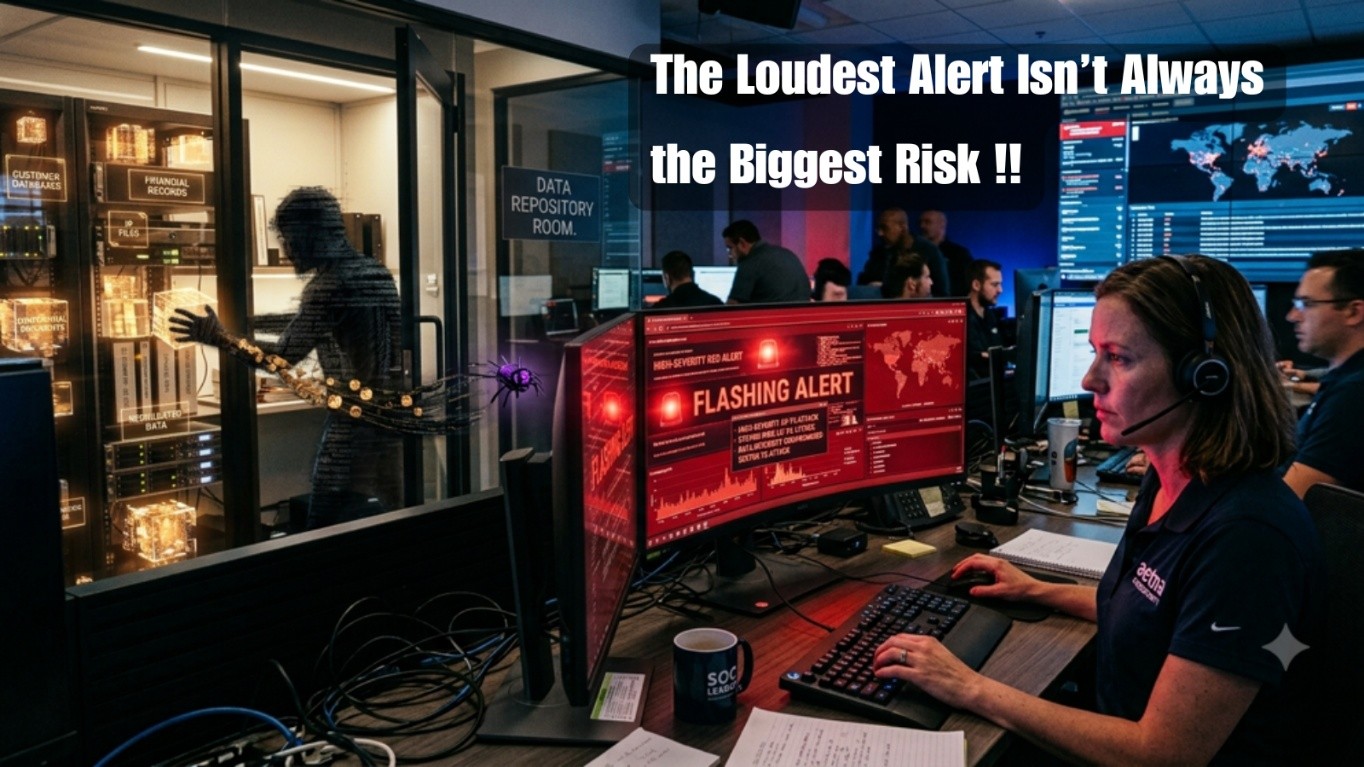
This is the real gap in how enterprise SOCs operate today: severity is a technical judgment, not a business judgment. For organizations pursuing SOC modernization, this is becoming a critical distinction: an AI-powered SOC needs business and data context, not just faster automation. And it’s costing CISOs the one thing they actually need from a SOC: confidence that the alerts getting attention first are the ones that actually threaten the business.
The Industry Shift: A Data-Aware SOC That Knows What Data Is at Risk
A data-aware SOC doesn’t throw out the traditional severity matrix — it adds the missing axis. Alongside asset criticality and threat confidence, severity scoring now factors in:
- Data classification — does the touched system hold PII, PHI, financial records, source code, or genuinely low-value data
- Regulatory exposure — does this data fall under GDPR, DORA, HIPAA, or similar frameworks that trigger notification obligations and financial penalties
- Blast radius — how far the compromised identity or asset can reach through permissions sprawl and data lineage, not just network adjacency
- Existing control context — whether encryption, masking, or access restrictions are already mitigating the exposure
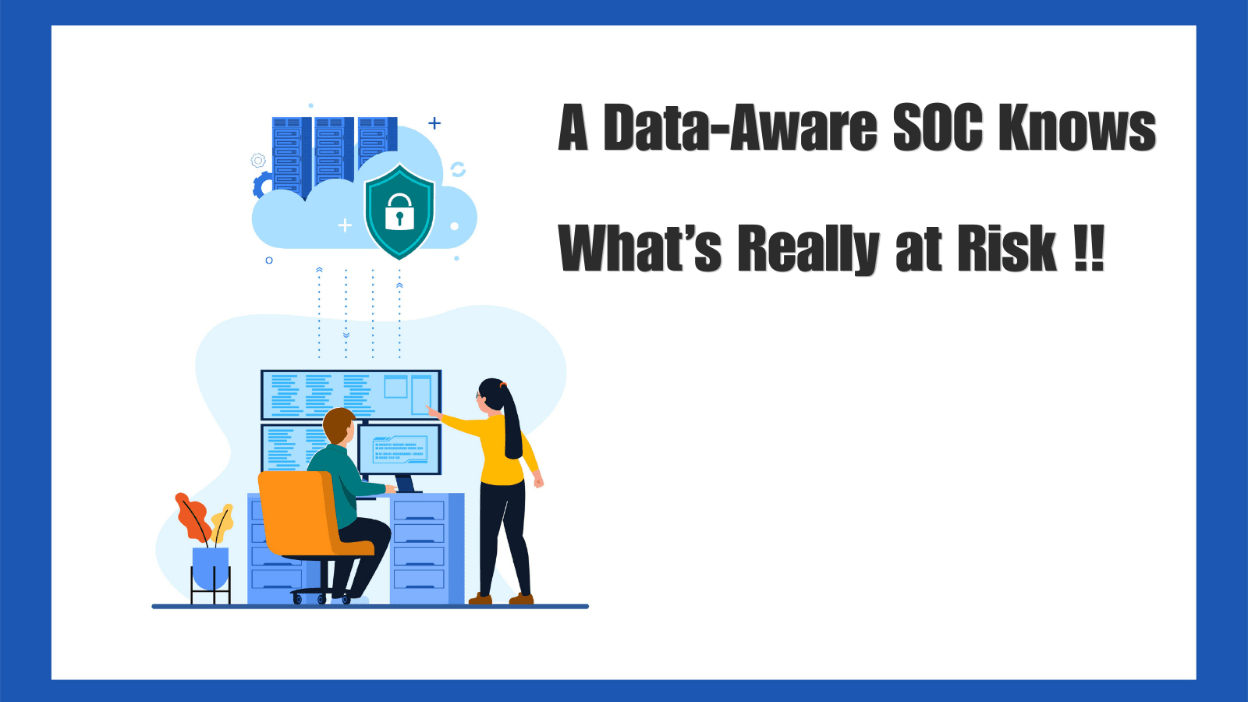
Feeding Data Security Posture Management (DSPM) and data classification signals — from platforms like Microsoft Purview or Varonis — directly into SOC/SIEM correlation logic changes what an analyst sees on the screen. This brings sensitive data exposure and business context into SOC incident prioritization while the investigation is still active. Severity stops meaning “how dangerous is this technique” and starts meaning “how serious is this for the business, right now, given what’s actually exposed.” An incident touching a regulated data store gets pulled to the top of the queue even when its technical signature looks routine — and a technically noisy alert on low-value data correctly drops down the list instead of consuming analyst hours.
What Data-Aware Incident Response Changes for the Enterprise
This shift changes the economics of the SOC in ways that matter directly to a CISO’s risk posture and a CIO’s operating budget:
- The right incidents surface first — not eventually, not during post-breach forensics
- Regulatory exposure gets identified earlier — under GDPR, DORA, and similar frameworks, the notification clock starts the moment sensitive data exposure is confirmed; earlier identification gives legal and compliance teams room to respond instead of react
- Analyst fatigue drops — teams stop treating every alert as equally urgent and start trusting risk-based incident prioritization.
- False-priority escalations fall — alerts touching low-sensitivity data get correctly deprioritized even when technically “High”
The YASH AI Autonomous SOC Differentiator
This is also where the YASH AI Autonomous SOC differentiates itself in today’s AI security operations landscape. A platform-agnostic managed services layer that integrates data classification signal into severity scoring, regardless of which SIEM, EDR, or cloud stack a client already runs.
Not “how fast is your AI at closing tickets” — every vendor will answer that well. The question that actually separates providers from us:
“When your AI scores an incident’s severity, does it know what data is actually at risk — or just what technique the attacker used?”
That’s the line between an YASH AI SOC that processes alerts quickly and one that protects the business. Breaches aren’t prevented by detection speed alone — they’re prevented, or contained, by whether the organization understood in the first hour exactly what was exposed and how serious it really was.
That’s the shift the industry needs to make: from data breach response to data-aware response.
At YASH Technologies, we help enterprises modernize security operations through AI-powered SOC capabilities, data-aware investigations, threat intelligence, and human expertise – helping teams prioritize the incidents that matter most to the business. To learn more, contact us at cybersecurity@yash.com

Shivendra Sharma
Technical Architect - Cybersecurity
Shivendra is a cybersecurity solution architect at YASH, focusing on building security strategies and executing solutions for security leaders that connect with their business objectives.
More From Author.
Related Posts.

Beyond MTTD and MTTR: How to Prove the Business Value of an AI-Enabled SOC
Shivaram Jeyasekaran

Your SOC Has Enough Alerts. Does It Deliver the Answers the Business Needs?
Shivaram Jeyasekaran


The Future of Security Operations Is Decision Intelligence-Augmented
Senthilvel Kumar

The Microsoft Security Shift CISOs Can’t Ignore
Mahipal Kirupanithy Senthilvel Kumar Shivaram Jeyasekaran

Your SOC Is Using AI. But Who Is Securing the AI Layer?
Shivaram Jeyasekaran

AI vs AI: Why Traditional SOCs Are Losing the 2026 Threat Race
Senthilvel Kumar Vikash Kumar

Mythos Moves in Hours. Your MTTD Starts Too Late
Shivendra Sharma