

AI SOC Without Data Security Is Half a Strategy: A CISO’s Framework for Unifying Both
Publish Date: September 21, 2026If you’re evaluating a move from a traditional SOC to an AI SOC, you’re asking the right question at the right time. But here’s the one most vendor won’t raise until after the contract is signed: what happens the day after detection gets fast?
That’s not a hypothetical. It’s the single most common gap enterprises hit after their AI SOC investment — not because detection failed, but because speed and knowledge are two different capabilities, and most AI SOC roadmaps are only built around one of them. If you’re comparing platforms right now, this is the question worth asking before you buy, not after.
One Framework, Two Capabilities
Every mature security program is really answering two separate questions:
Did something bad happen, and how fast can we respond? — that’s AI SOC. What did it touch, was it sensitive, and are we exposed or non-compliant? — that’s Data Security.
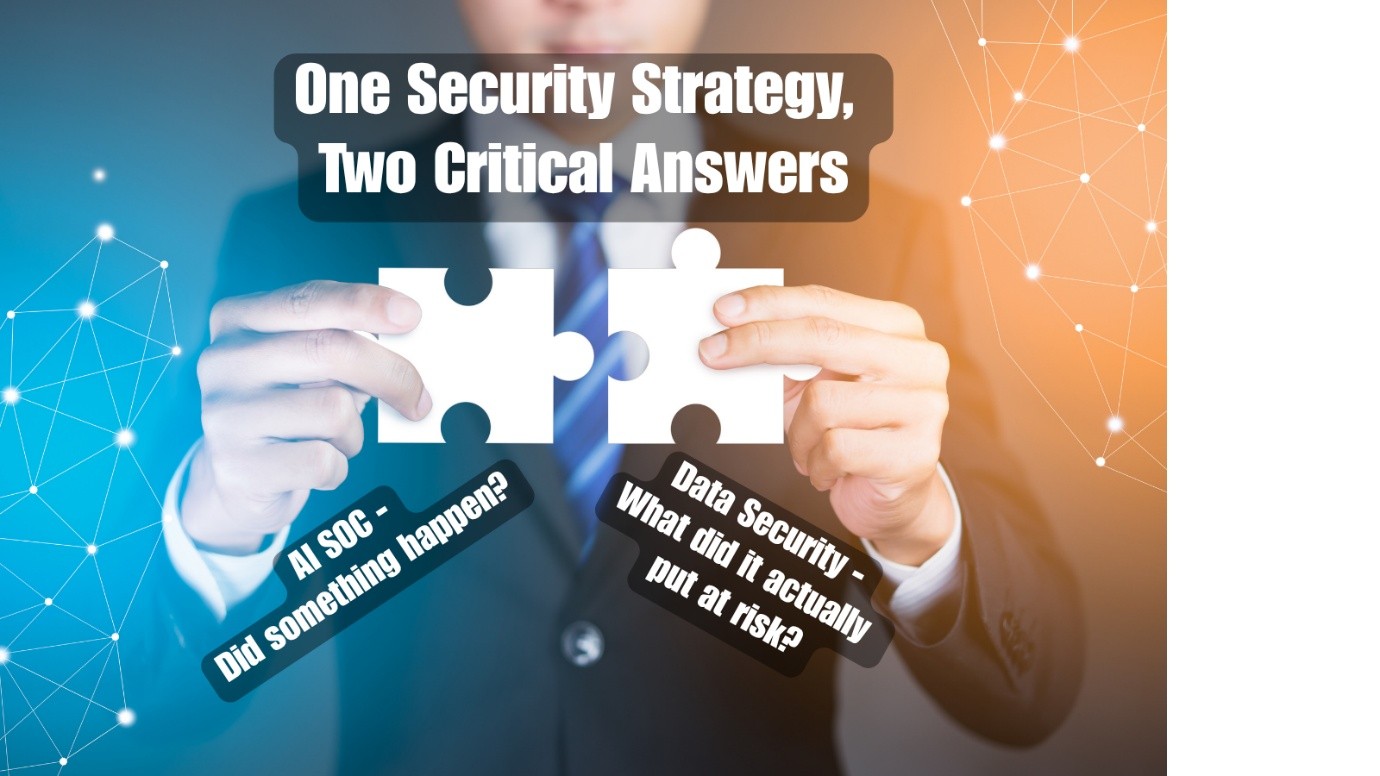
That’s the gap worth closing before you finalize your AI SOC strategy, not after.
How YASH Bridges This Gap in AI SOC
AI SOC platforms are built for one job: speed. Faster detection, faster triage, faster response. MTTD and MTTR go down, alert fatigue goes down, analysts get their time back. That’s real value, and it’s why the market has rushed toward it.
But speed answers only half the question a CISO actually needs answered. Most AI SOC platforms weren’t built to know what’s sensitive, what’s regulated, or what’s genuinely a crown-jewel asset versus a low-value test file. At YASH, we see this exact pattern across enterprise engagements: a SOC that tells you an endpoint was compromised in real time — and still leaves you unable to tell your board, or your regulator, what was actually at risk. That’s why we don’t sell AI SOC as a standalone upgrade. Closing that gap, not just running faster, is where we’ve focused our approach.
What Unified Actually Looks Like
The fix isn’t complicated, but it does require the two functions to talk to each other, not sit in separate tool stacks:
- Alert prioritization gets smarter. A compromised endpoint with access to PII is not the same incident as one without it — but today, most SOCs treat them identically because they lack data context at triage time.
- Regulatory response gets faster. One of the most common failure patterns: containment happens in hours, but it takes six weeks to determine notification scope under GDPR, DORA, or NIS2 — because the data was never classified in the first place.
- The CISO gets one view, not three. Instead of a detection dashboard, a data risk dashboard, and a compliance spreadsheet that never sync, unified visibility means seeing detection and data exposure side by side.
Before You Finalize Your AI SOC Investment
Ask one question of any AI SOC platform, roadmap, or vendor pitch on your desk right now: does it know what it’s protecting?
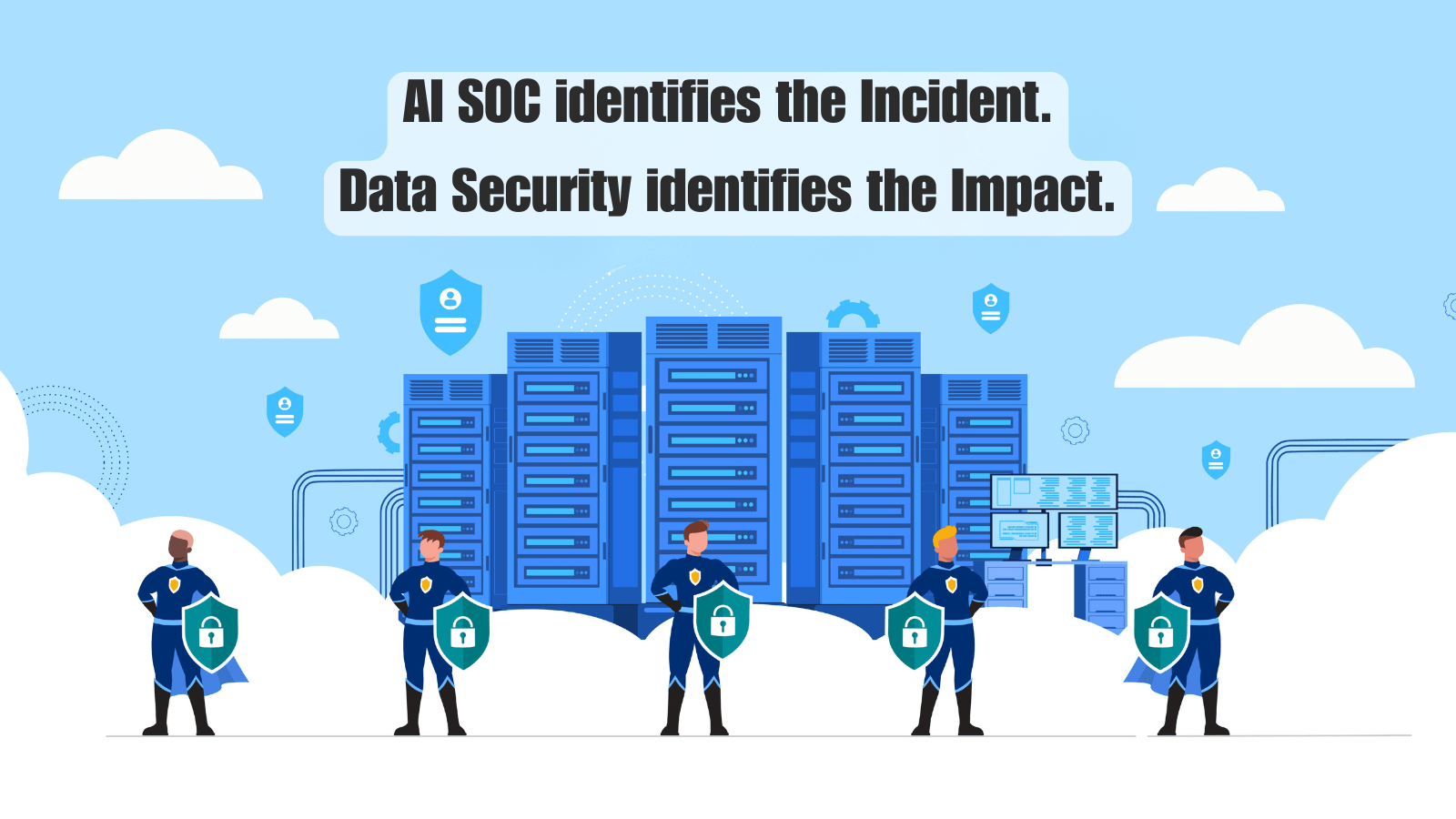
This is the thinking behind YASH’s Cybersecurity 2.0 approach — treating AI SOC and Data Security as one transformation narrative from day one, not two separate line items competing for budget later. Detection tells you something happened. Data security tells you whether it mattered. If you’re upgrading your SOC, build it with both answers in place, not just one.
Curious what a unified AI SOC and Data Security assessment could look like for your environment? Let’s talk — book a demo with YASH.
Shivendra Sharma
Technical Architect - Cybersecurity
Shivendra is a cybersecurity solution architect at YASH, focusing on building security strategies and executing solutions for security leaders that connect with their business objectives.
More From Author.
Related Posts.

Beyond MTTD and MTTR: How to Prove the Business Value of an AI-Enabled SOC
Shivaram Jeyasekaran

Your SOC Has Enough Alerts. Does It Deliver the Answers the Business Needs?
Shivaram Jeyasekaran


The Future of Security Operations Is Decision Intelligence-Augmented
Senthilvel Kumar

The Microsoft Security Shift CISOs Can’t Ignore
Mahipal Kirupanithy Senthilvel Kumar Shivaram Jeyasekaran

Your SOC Is Using AI. But Who Is Securing the AI Layer?
Shivaram Jeyasekaran

AI vs AI: Why Traditional SOCs Are Losing the 2026 Threat Race
Senthilvel Kumar Vikash Kumar

Mythos Moves in Hours. Your MTTD Starts Too Late
Shivendra Sharma