
Can AI Really Investigate Security Incidents? I Believe We’re Asking the Wrong Question.
Publish Date: July 31, 2026Every cybersecurity conference I attend seems to carry the same message:
- AI will replace SOC analysts.
- AI will investigate incidents.
- AI will automate security operations.
I understand why this conversation is happening. Security teams are under pressure. Alerts keep increasing. Analysts are stretched. Threats are moving faster. Everyone is looking for a better way to run security operations. But as someone who has spent years building and leading cybersecurity services, I do not think “Will AI replace analysts?” is the right question.
The better question is:
Which parts of a security investigation should AI handle, and which decisions should remain with experienced human analysts?
That is where the real opportunity lies.
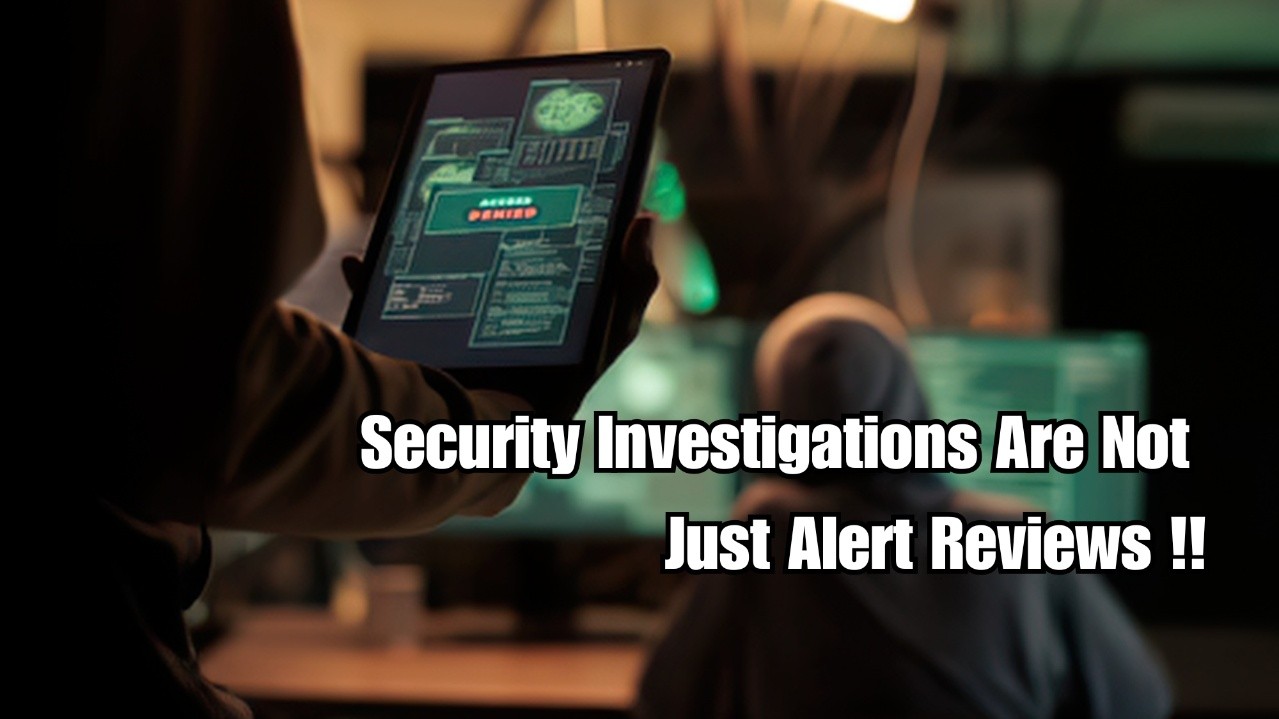
A security investigation is not simply about reading alerts from a SIEM, EDR, or XDR platform. Experienced SOC analysts do much more than that. They assess context, understand business processes, distinguish between expected activity and suspicious behavior, evaluate potential business impact, and decide the most appropriate response. Those decisions are rarely black and white.
For example, isolating a server may look like the right technical action. But what if that server supports a critical production process? Disabling a user account may reduce risk, but what if that account belongs to an executive in the middle of a business-critical activity? That is where human judgment matters.
Where AI can make a real difference
While human judgment remains critical, many investigation tasks consume valuable analyst time without always requiring deep decision-making.
AI can help with:
- Collecting logs across multiple systems
- Correlating alerts from SIEM, EDR, identity, cloud, and application tools
- Building attack timelines
- Mapping activity to MITRE ATT&CK techniques
- Searching threat intelligence sources
- Identifying related users, devices, IPs, and identities
- Summarizing hundreds of events into a clear incident story
These tasks are important, but they are also repetitive and time-consuming.
Imagine an analyst starting an investigation with most of the evidence already assembled. Related entities are mapped. The likely attack path is visible. Behavior patterns are highlighted. Threat intelligence context is included. A concise incident summary is ready for review.
Instead of spending hours gathering and organizing information, the analyst can spend more time making informed decisions. That is the shift that matters.
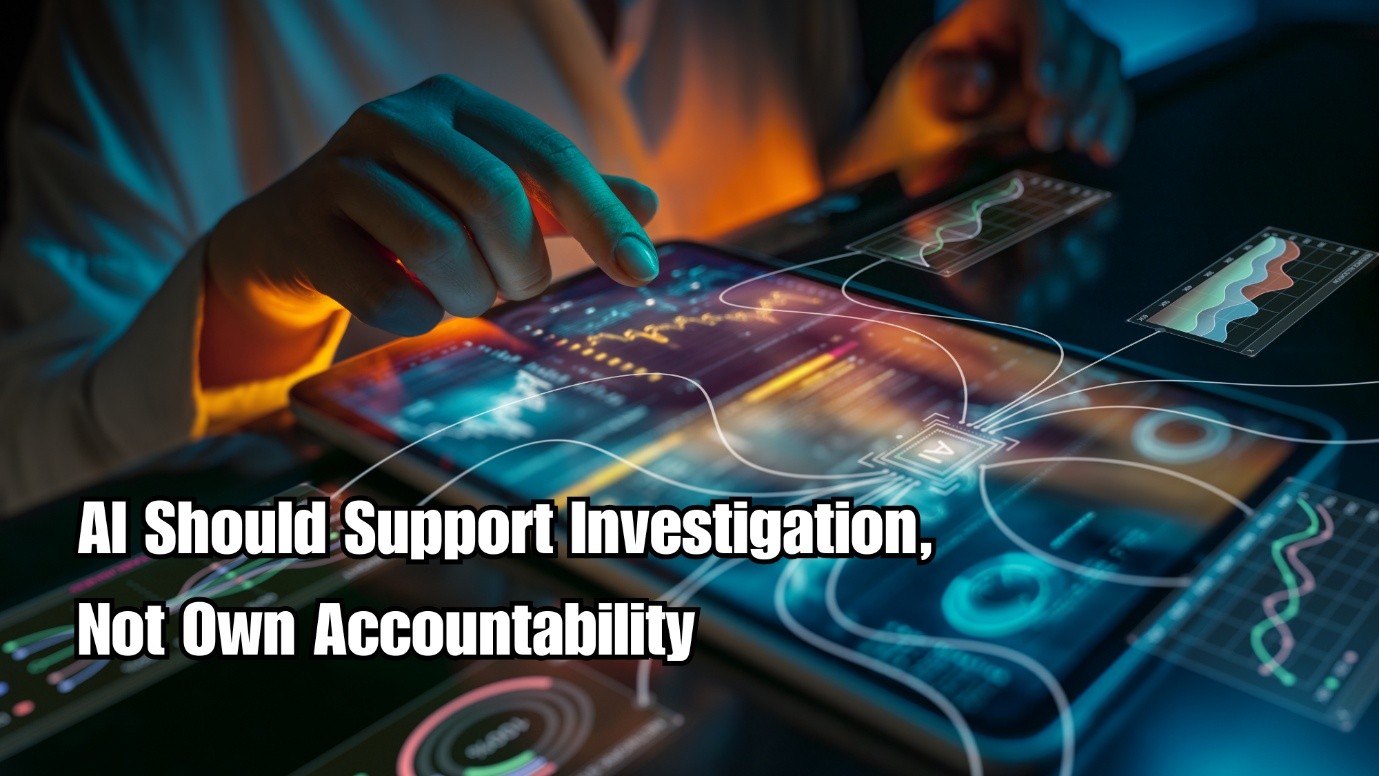
There is a big difference between AI assisting an investigation and AI owning the outcome.
AI can identify patterns, surface evidence, summarize activity, recommend next steps, and reduce manual work. But AI does not fully understand every organization’s business priorities. It may not know whether an unusual activity is expected during a specific business cycle. It does not carry accountability for decisions that affect operations, customers, compliance, or revenue.
And like any technology, AI can occasionally be inaccurate — sometimes with confidence. That is why cybersecurity teams still need validation, oversight, and human accountability. In security operations, speed is important. But speed alone is not enough.
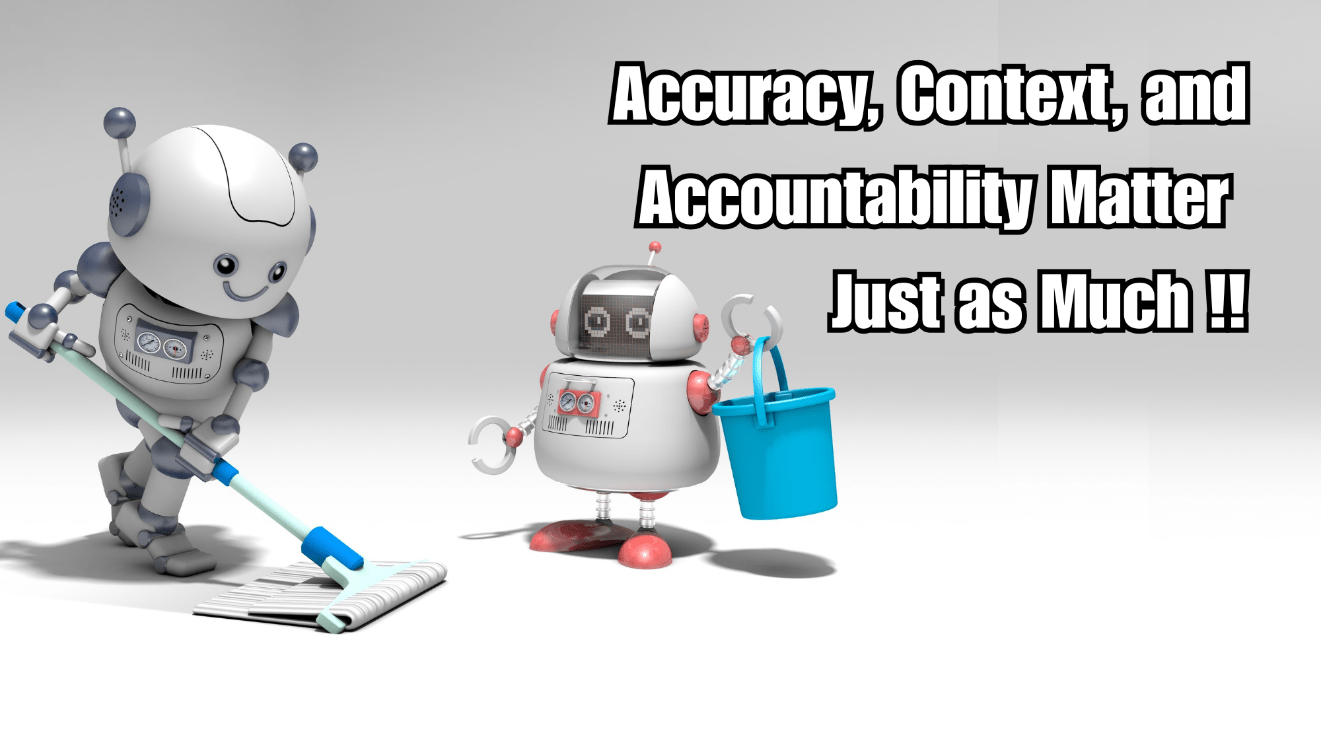
The future is AI-supported investigation and human-led response
I believe the future of incident response is not about removing analysts from the process. It is about giving them better support. AI can continuously assist analysts by accelerating investigations, reducing repetitive work, surfacing relevant insights, and helping teams move from alert overload to faster answers.
Human analysts should continue to own the decisions that affect business risk. That is also how I look at the future of an AI Autonomous SOC. It should not mean a SOC without people. It should mean a modern security operations model where AI helps analysts investigate faster, prioritize better, automate repeatable workflows, and respond with greater confidence.
The goal is not to replace expertise. The goal is to make expertise more effective.
At YASH Technologies, this is the direction we are taking with AI Autonomous SOC — helping security teams reduce noise, investigate faster, and respond with greater confidence while keeping human expertise at the center of critical decisions.
AI has a powerful role to play in incident response. But its greatest value is not in replacing analysts. Its greatest value is in helping analysts get to the right answer faster.
Where do you see AI adding the most value in incident response — and where should humans always remain in the loop?

Senthilvel Kumar
Vice President – Cyber Security Services
Senthil is a cyber security Practice Head and VP at YASH offering advisory on cyber security solutions to CxO's, CISO, Board Level Executives for building a robust security modernization programme covering on-prem and Cloud.
More From Author.
Related Posts.

Beyond MTTD and MTTR: How to Prove the Business Value of an AI-Enabled SOC
Shivaram Jeyasekaran

Your SOC Has Enough Alerts. Does It Deliver the Answers the Business Needs?
Shivaram Jeyasekaran



The Future of Security Operations Is Decision Intelligence-Augmented
Senthilvel Kumar
The Microsoft Security Shift CISOs Can’t Ignore
Mahipal Kirupanithy Senthilvel Kumar Shivaram Jeyasekaran
Your SOC Is Using AI. But Who Is Securing the AI Layer?
Shivaram Jeyasekaran
AI vs AI: Why Traditional SOCs Are Losing the 2026 Threat Race
Senthilvel Kumar Vikash Kumar
Mythos Moves in Hours. Your MTTD Starts Too Late
Shivendra Sharma