
Evolution of SAP GRC: From On-Premises to Integrated Cloud-Native Solution
Publish Date: April 20, 2026Many organizations still manage governance, risk, and compliance (GRC) using outdated tools such as static Excel reports, screen captures, and manual reviews. If your organization still relies on these approaches to manage risk, compliance, policies, and audits, change is overdue. With stricter regulatory environments and escalating cyber risks, modernizing GRC is a business necessity.
The urgency is also reflected in market trends. The latest study predicts that the global GRC market will grow from roughly $63 billion in 2024 to over $166 billion by 2032, fueled by regulatory mandates such as GDPR, SOX, and DORA, as well as increasingly complex cyber threats [1]. For compliance leaders, this signals a shift: GRC must evolve from a reactive cost center into a strategic, always-on capability that enables smarter and faster decision-making.
Inside SAP’s Cloud-Native GRC: Real-Time Intelligence for Modern Risk Management
Modern GRC is no longer a periodic compliance exercise—it’s a continuous intelligence capability. Leaders today need real-time visibility into risks, access controls, and compliance exposure. SAP’s cloud-native GRC portfolio is designed to deliver exactly that.
Solutions such as SAP Cloud Identity Access Governance, Risk Management, and Audit and Fraud Management bring risk oversight, compliance monitoring, and access governance into a single integrated environment. Instead of waiting for annual audits, organizations can continuously monitor controls and analyze risk signals directly from their SAP landscape.
AI-powered analytics further strengthen this capability by identifying unusual access patterns or transactional anomalies early—allowing teams to prevent issues before they escalate into violations. Built on SAP Business Technology Platform (BTP), these solutions integrate seamlessly across SAP and non-SAP systems while automatic updates keep organizations aligned with evolving regulations.
The result is a shift from reactive compliance to a proactive, data-driven governance model that supports faster, more confident business decisions.
From Legacy to Cloud: Flexible Paths to Modernizing SAP GRC
Many organizations still depend on legacy investments that cannot be replaced overnight, while others are ready to move quickly toward the cloud. SAP supports multiple migration strategies that allow organizations to modernize at their own pace.
- Hybrid integration via SAP BTP
Organizations that want to experiment with cloud innovation without retiring Access Control 12.0 can adopt a hybrid model. Using SAP BTP, businesses can run AC 12.0 alongside Cloud Identity Access Governance (IAG). This approach enables companies to pilot cloud-based analytics, workflow automation, and predictive monitoring while maintaining their existing systems. - SAP Access Control on SAP HANA (planned for 2026)
Organizations that must remain on-premises due to regulatory or internal policy requirements can adopt the upcoming SAP Access Control edition on SAP HANA. This option improves performance and provides a modern database platform while preserving the familiar capabilities of GRC 12.0. - Embedded Access Control in SAP S/4HANA
Businesses already using SAP Access Control can transition to the embedded version within SAP S/4HANA. This model integrates GRC directly with the core ERP environment, enabling real-time data flows, streamlined risk monitoring, and compliance management embedded within everyday business processes. - Full cloud via IAG
Organizations ready to adopt a cloud-first strategy can use SAP Cloud Identity Access Governance as their central GRC platform. Designed as the cloud counterpart to Access Control, IAG is continuously evolving, with enhancements such as automated risk analysis and advanced machine learning.
These options allow organizations to modernize their GRC landscape gradually—whether by experimenting with hybrid models, upgrading infrastructure, or moving entirely to a cloud-native platform.
Beyond Compliance: The Strategic Business Value of Cloud-Enabled GRC
Once a migration path is defined, the benefits of cloud-based GRC become clear.
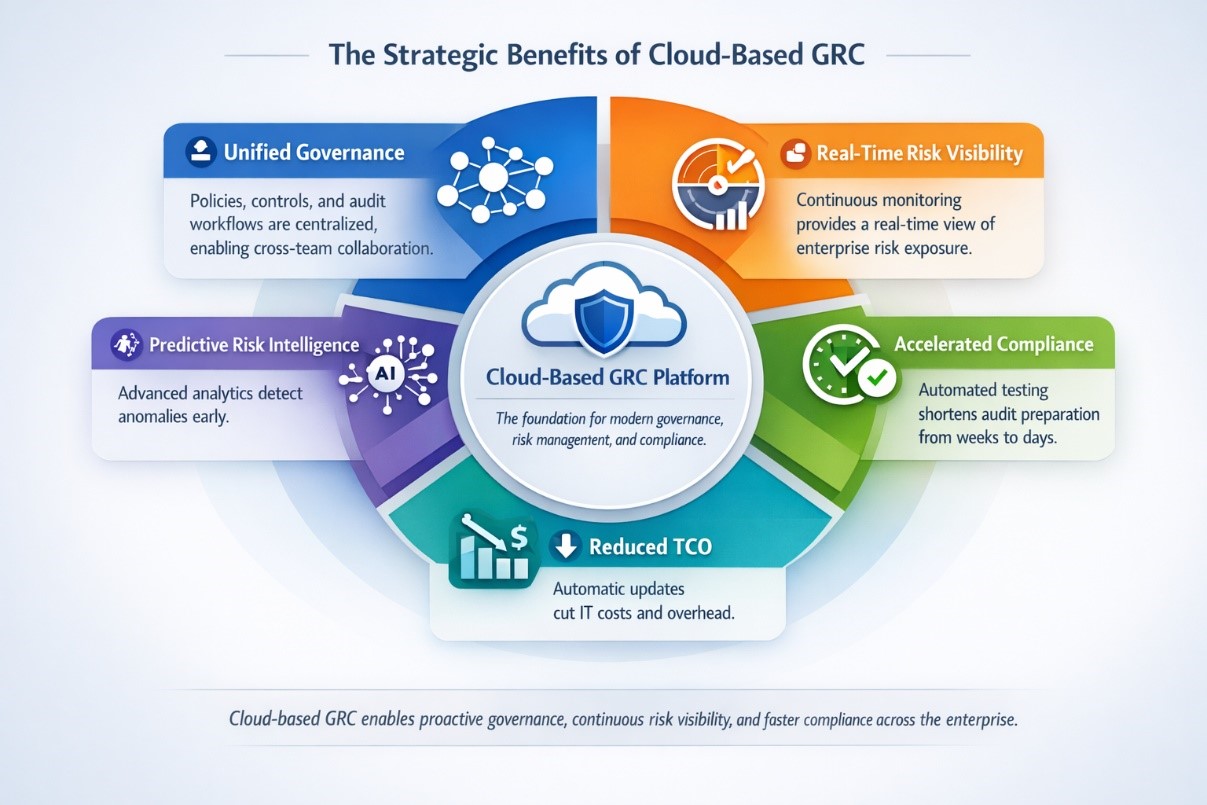
As the GRC landscape evolves, success will belong to organizations that move beyond reactive compliance. Cloud-based GRC platforms position businesses to adopt future innovations—systems that learn from data, adapt to regulatory change, and continuously strengthen governance.
Accelerating GRC Transformation with YASH Technologies
As a global SAP Gold Partner, YASH Technologies helps mid- to large-sized enterprises modernize their GRC environments end-to-end. Whether organizations want to pilot cloud capabilities alongside existing systems, migrate to SAP’s cloud-native solutions, or continuously optimize performance, YASH provides the frameworks, accelerators, and expertise to ensure a smooth transition. To learn more about how YASH applies SAP GRC capabilities, contact us at info@yash.com.

More From Author.
Related Posts.



Why Unused SAP Data Costs More Than You Think
Bhavani Sankar Rajasekharuni

How to Carve Out Your SAP System Efficiently Using Archiving
Yellaiah Gattaiah Devasani

Why SAP Archiving Projects Fail Before They Start
Yellaiah Gattaiah Devasani



Predictive Maintenance Is Only as Good as the System Behind It
Firdosh Kotwal Hari Mantravadi