
AI has moved from an innovation experiment to a foundational enterprise capability. It now informs decisions, drives automation, shapes customer interactions, and influences financial outcomes. Yet for all its promise, AI introduces a new category of enterprise risk volatile, fast-moving, and deeply interconnected with the systems businesses rely on every day.
For CSOs, CISOs, and Security Directors, the challenge is no longer understanding what AI can do. The real challenge lies in figuring out how to integrate it safely—without compromising trust, compliance, or operational continuity. The rapid acceleration of AI has outpaced the governance structures that traditionally anchor enterprise risk management, turning “AI safety” into a board-level priority rather than a purely technical discussion.
AI as an Enterprise Control and Governance Problem
The traditional security stack, endpoints, identities, applications, networks, was designed for deterministic systems. AI breaks that architecture. Models learn from dynamic datasets, generate unpredictable outputs, adapt autonomously, and inherit vulnerabilities from sources outside the enterprise’s control. Small deviations can quickly escalate into large-scale failure modes such asd coordinated AI driven cyber-attacks impacting the business operations.
This shift explains why global boards increasingly treat AI as a control problem. AI touches three dimensions that leadership monitors closely:
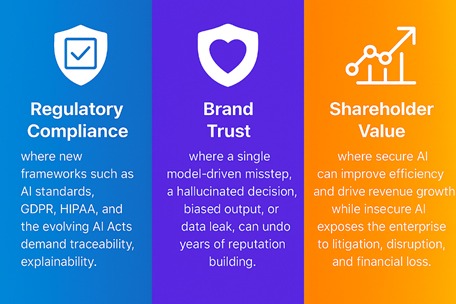
As the European Journal of Futures Research notes, AI-related incidents may soon cost organizations more than $57 billion annually. Safety is no longer a defensive necessity; it is a determinant of enterprise resilience.
AI Security Is Now a Strategic Responsibility
Boards increasingly expect security leaders to answer difficult but essential questions:
How are AI models governed? How is training data sourced and validated? What controls detect drift or misuse? How quickly can vulnerabilities be identified and mitigated?
And crucially: Can the enterprise quantify the business impact of an AI failure?
AI introduces fiduciary responsibilities that extend far beyond IT. Security teams must safeguard not only systems, but also the integrity of automated decisions, model lineage, and data supply chains. The speed and scale of AI mean that assumptions that once held true for digital systems, predictability, bounded behavior, controllable change windows, no longer apply.
We strongly believe in “the solution lies in the problem”. To enable AI safely, enterprises need a governance model equal to the complexity and velocity of AI adoption.
A Governance-First Model for Safe AI Adoption
YASH Technologies believes the only sustainable way to scale AI is through a governance-first posture, one that embeds accountability, transparency, and measurable control around every model in production.
This approach rests on three interconnected principles:
Continuous Verification
Every model interaction, data call, and access request is validated in real time, ensuring trustworthy behavior even in dynamic environments.
Adaptive Governance
Learn together and establish Controls to evolve with context. As models drift, workloads change, or risk signals shift, guardrails adjust automatically to maintain safe operation.
Holistic Oversight
Boards and leadership gain visibility into the health, lineage, and risk posture of AI systems, turning AI assurance into a continuous governance function rather than a reactive audit activity.
These principles establish what C-level leaders increasingly demand: predictability in systems designed to learn unpredictably.
From Governance to Protection: Core Capabilities for Safe AI
Governance must be supported by operational mechanisms that enforce safety at scale. YASH’s AI security model aligns protection with business outcomes, ensuring every AI system operates reliably and in compliance with global expectations.
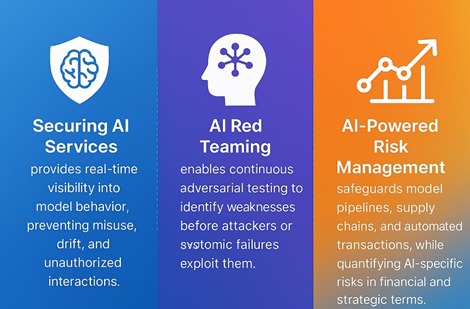
These capabilities turn AI safety into an enabler of organizational confidence.
The Economics of Trust
According to the World Economic Forum, two-thirds of enterprises expect AI to significantly reshape cybersecurity in the coming year, yet fewer than 40% have mechanisms to assess AI security before deployment. This trust gap is now a strategic vulnerability.
AI incidents increasingly influence how investors evaluate enterprise resilience, how regulators set expectations, and how customers judge credibility. Ensuring AI safety is now about protecting enterprise value in a world where automated decisions can amplify both opportunity and exposure.
Final Thoughts
The organizations that benefit most from AI will not be those that adopt AI fastest, but those choose to adopt it safely. CSOs and enterprise leaders can bring governance where AI introduces uncertainty, introduce discipline where AI introduces dynamism, and elevate assurance where AI introduces automation.
At YASH Technologies, we help enterprises build that foundation of trust. enabling AI that is secure, transparent, and engineered for long-term business impact.
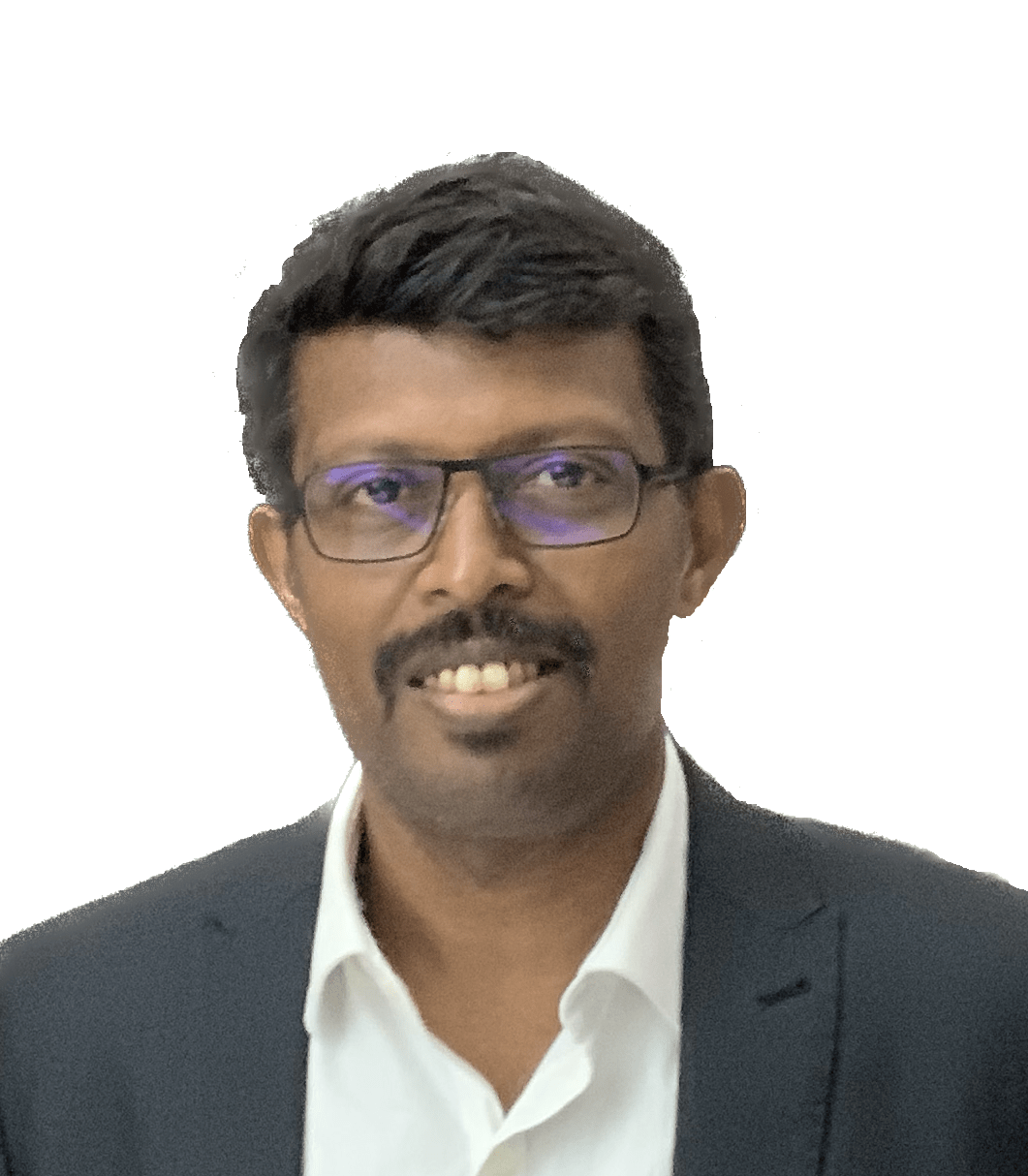
Senthilvel Kumar
Vice President – Cyber Security Services
Senthil is a cyber security Practice Head and VP at YASH offering advisory on cyber security solutions to CxO's, CISO, Board Level Executives for building a robust security modernization programme covering on-prem and Cloud.
More From Author.
Related Posts.

The Hidden AI Risk in Your Cloud: Why CSPM Is Now a Board-Level Priority
Mahipal Kirupanithy

How AI-Powered EDR Stops Modern Attacks in Real Time
Mahipal Kirupanithy
From Annual Audits to Always-On Assurance: How AI Is Redefining SOC & ISO Compliance
Mahipal Kirupanithy Shivaram Jeyasekaran
Why Third-Party Risk Can No Longer Be Manual: Building an AI-Driven TPRM Program
Mahipal Kirupanithy Shivaram Jeyasekaran

When Ransomware Reprices the Deal: Cyber Risk in Modern M&A
Ankush Arora Shivaram Jeyasekaran
The AWS Security Arsenal: 7 Services Every Cloud Leader Should Master
Mahipal Kirupanithy Shivaram Jeyasekaran
Stop Collecting Security Tools. Start Managing Cyber Risk.
Kaisar Chishti Shivaram Jeyasekaran Val Coucke

Microsoft Sentinel Data Lake: A Game-Changer for Security Operations
Kaisar Chishti Shivaram Jeyasekaran Val Coucke
AI Governance: Board-Level Oversight for Emerging Technology
Shivaram Jeyasekaran