


Cybersecurity Strategic Priorities for 2026: A Leadership Agenda for Every Organization
Publish Date: December 8, 2025
Year 2026 presents a unique inflection point, where AI-powered threats, quantum computing on the horizon, and increasingly sophisticated adversaries are forcing every organization to fundamentally rethink their security posture.
This isn’t another compliance checklist or vendor pitch. This is a strategic playbook drawn from our team’s frontline experience protecting organizations across every industry and size. Together with our specialized portfolio leaders – experts in identity management, vulnerability assessment, AI security, vendor risk, and more, We bring you top ten priorities with breakdown that will include resiliency factors in 2026.
The winners treat identity as the new perimeter, design for resilience, pressure-test their vendors, and use AI and automation to compress detection and recovery from days to minutes.
Whether you’re five people or fifty thousand, the priorities are the same – only the scale changes.
Why Smaller Organizations Get Hit So Often
“We’re too small to be targeted” remains one of the most dangerous myths in cybersecurity. Attackers follow the path of least resistance. Thinner controls and fewer people make small and mid-sized businesses softer, more profitable targets – not less attractive ones.
The good news? Fortune-500-grade security priorities scale down beautifully. It’s about smart choices and focused execution, not endless budgets. Let’s dive into what matters most.
Priority #1 : AI is redefining everything including Security for the Enterprises
Continue to build robust security for your business
CISO and other security leaders are continuing to include AI in the forefront to strengthen the organisation’s security measures. This unfolds two parameters (1). Implementing security for the AI elements adopted by the business (2). Adopt AI within Security services implemented to protect the organisation. This redefines the enterprise’s security measures across the enterprise.
To a large extent basics would remains the same. However, a shift in approach to address security challenges is non-negotiable in 2026. We are seeing that few of our customers started re-evaluating the baseline controls. Today’s known boundaries are not relevant tomorrow, data movements causing risks planes to elevate the security measures. We are taking a cautious steps in maximising the Returns on Investments (ROI) on all investments done so far.
In order to keep this article shorter, we intent to cover a detailed strategic planning around this shortly.
Want to explore more insights from Senthilvel Kumar? Check out his other blogs: https://www.yash.com/blog_author/senthilvel-kumar/

Priority #2: Master the Basics – A CISO perspective
The Fundamental Truth
Despite headlines about sophisticated nation-state attacks and zero-day exploits, the vast majority of breaches exploit fundamental security failures: missing patches, weak passwords, no MFA, inadequate backups, poor access controls, and absent monitoring. Advanced threats get attention, but basic hygiene gaps cause most actual damage.
Organizations rush to implement cutting-edge AI security tools while leaving admin accounts without MFA. They invest in threat intelligence while running unpatched systems accessible from the internet. They deploy deception technology while lacking basic asset inventories.
Why Basics Matter Most
Sophisticated security tools build upon foundational controls. AI-powered threat detection is useless if you don’t have comprehensive logging. Zero Trust architecture fails if you can’t identify your assets. Incident response plans collapse if you haven’t tested backup restoration.
Attackers follow the path of least resistance. They don’t waste zero-day exploits on organizations that lack basic controls—they simply walk through open doors. Master the fundamentals before chasing advanced capabilities.
Essential Hygiene Checklist
- Multi-Factor Authentication (MFA) Everywhere – Especially email, admin accounts, VPNs, and financial systems. Non-negotiable.
- Automated Backups with Tested Restores – Daily backups, verified integrity, documented recovery procedures, actual restoration tests.
- Patch Management with SLAs & Ownership – Clear timelines, assigned responsibility, tracking compliance, emergency procedures.
- Comprehensive Asset Inventory – You can’t protect what you don’t know exists. Include cloud resources, shadow IT, and remote devices.
- Quarterly Access Reviews – Remove stale accounts, validate permissions, ensure least-privilege access principles.
- Documented and Practiced Incident Response Plan – Step-by-step playbooks, contact lists, communication templates, annual exercises.
- Continuous Security Awareness (Not Annual) – Regular training, phishing simulations, security updates, positive reinforcement.
- Vendor Access Tracking & Controls – Know who has access, monitor their activity, review regularly, remove when no longer needed.
- Network Segmentation – Isolate critical systems, contain breaches, reduce lateral movement opportunities.
- Logging & Monitoring for Anomalies – Centralized log collection, real-time alerting, threat hunting capabilities, retention policies.
The Hard Reality
If these fundamentals aren’t in place, AI won’t save you. Advanced tools can’t compensate for missing basics. Start here. Build from a solid foundation. Master the controls that stop 90% of attacks before investing in defenses against the sophisticated 10%.
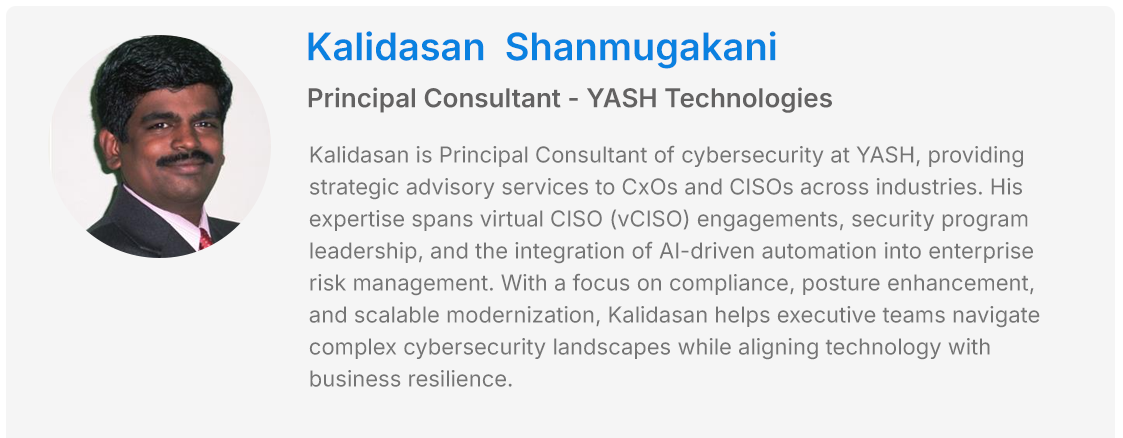
“Every advanced engagement I lead starts with the same question: ‘Are the basics in place?’ And too often, the answer is no. Organizations want to talk about AI and Zero Trust while running servers without MFA. I’m not saying don’t innovate—I’m saying you can’t build a skyscraper on quicksand. Get the fundamentals right, then layer in sophistication. That’s the path to resilient security”,
Said by Kalidasan Shangumakani
Priority #3: Secure Your Supply Chain & Vendors
The Trend
Your security is only as strong as your weakest vendor. Third-party involvement in breaches is climbing dramatically—recent data shows supply chain attacks increasing by over 40% year-over-year. One compromised vendor can ripple through dozens or hundreds of downstream organizations.
Modern businesses depend on intricate vendor ecosystems. Your SaaS providers, cloud hosting partners, payment processors, and contractors all have access to your systems and data. Each connection is a potential attack vector that bypasses your perimeter defenses entirely.
Why This Happens
Attackers have realized that penetrating a single software vendor or service provider can unlock hundreds of customers simultaneously. It’s more efficient than targeting organizations individually. High-profile supply chain attacks have demonstrated that even sophisticated enterprises fall victim when their trusted vendors are compromised.
Many organizations grant vendors excessive access without proper monitoring. Legacy vendors may have credentials that haven’t been reviewed in years. The result: a shadow ecosystem of access you neither control nor fully understand.
What To Do (By Organization Size)
Small Organizations (5-50 employees)
- Create a vendor inventory tracking who has system/data access. Ask basic security questions before contracts (MFA, patching, cyber insurance), require breach notifications, and review vendor access quarterly with removal of inactive accounts.
Mid-Sized Organizations (50-500 employees)
- Implement formal vendor risk assessments with standardized questionnaires and require evidence (SOC 2 reports, pen test results). Establish vendor access governance, create risk-based vendor tiers, include security requirements in contracts, and deploy monitored vendor access channels.
Enterprise Organizations (500+ employees)
- Build comprehensive TPRM programs with continuous vendor monitoring using security ratings services. Require critical vendors to participate in security exercises, establish supply chain security standards (NIST 800-161, ISO 28000), deploy vendor privileged access management (VPAM) with just-in-time access, create alternate vendor strategies for single points of failure, and integrate vendor security metrics into board reporting.
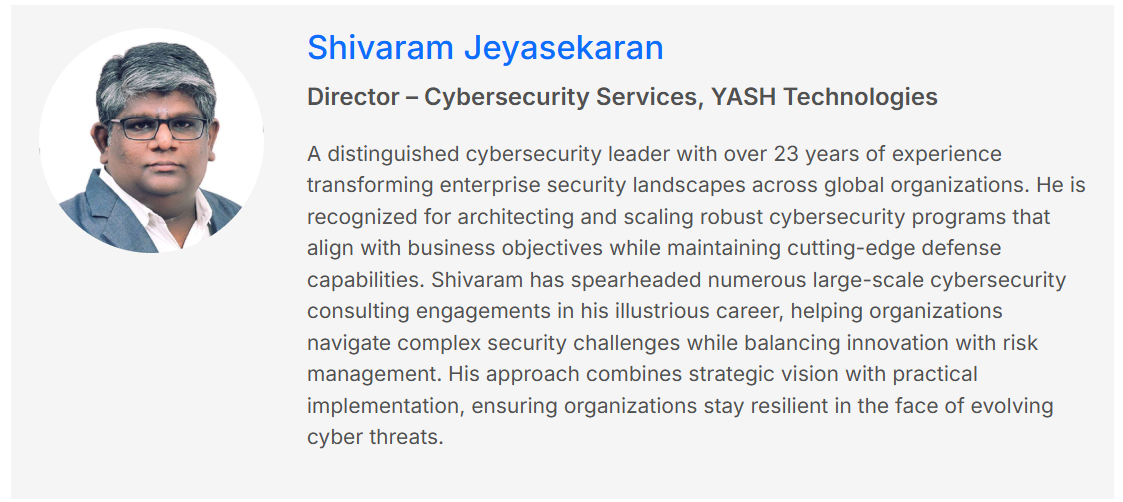
Supply chain attacks are the ultimate force multiplier for adversaries. One weak vendor can compromise hundreds of organizations in a single strike. We’ve seen enterprises with world-class internal security fall victim because they overlooked third-party risk. Vendor trust isn’t a checkbox—it’s a continuous discipline that demands visibility, governance, and proactive monitoring”,
said by Shivaram
Want to explore more insights from Shivaram? Check out his other blogs: https://www.yash.com/blog_author/shivaram-jeyasekaran/
Priority #4: Elevate Cybersecurity to the Boardroom
Business Reality
Cybersecurity has emerged as a top-three strategic priority for organizations across every industry. It’s no longer an IT issue—it’s a business risk that impacts revenue, reputation, regulatory compliance, customer trust, and shareholder value. Yet many boards still receive technical reports they can’t interpret rather than business risk assessments they can act upon.
High-profile breaches make headlines weekly, with consequences extending far beyond technical remediation. Stock prices drop, customers leave, executives resign, and regulatory penalties reach hundreds of millions. Boards and investors increasingly demand visibility into cyber risk as a fundamental aspect of enterprise risk management.
Why This Elevation Matters
Effective cybersecurity requires resources, executive support, and strategic alignment with business objectives. When cyber is trapped in IT, it competes for budget with infrastructure upgrades and help desk staffing. When elevated to board-level risk, it receives appropriate investment and executive attention.
Security decisions involve business trade-offs—speed versus safety, convenience versus control, innovation versus risk. These are strategic choices that require business context, not just technical expertise. Security leaders need board engagement to make informed decisions aligned with organizational risk appetite.
What To Do (By Organization Size)
Small Organizations (5-50 employees)
- Assign cyber risk ownership to a senior leader and brief leadership quarterly using business language focused on risks, not technical details. Include cybersecurity in strategic planning, maintain appropriate cyber insurance coverage, and document critical assets with acceptable risk levels.
Mid-Sized Organizations (50-500 employees)
- Designate a senior security leader reporting to CEO or board with clear accountability. Provide regular board cyber risk briefings in business terms, quantify risk using frameworks like FAIR, include security metrics in enterprise risk dashboards, conduct annual board-level tabletop exercises, ensure cyber insurance aligns with risk exposure, and integrate security into M&A due diligence.
Enterprise Organizations (500+ employees)
- Establish CISO as executive position with board access and create board-level cyber risk committees. Implement comprehensive cyber risk quantification programs, deliver quarterly board reporting with industry benchmarking, include cybersecurity in enterprise risk management frameworks, conduct annual board cyber risk appetite discussions, ensure comprehensive cyber insurance with incident response retainers, develop succession plans for critical security roles, create security governance frameworks (NIST CSF, ISO 27001), and participate in industry ISACs for threat intelligence.
“The conversation has shifted from ‘Can we afford security?’ to ‘Can we afford not to?’ Boards that treat cyber as a line item are missing the point—it’s an enterprise risk that touches every business function. I work with boards to translate technical security into business language they can use to make informed decisions about risk appetite, insurance, and strategic investments. When the board gets it, everything else follows”,
said by Mahipal Kirupanithy
Want to explore more insights from Mahipal? Check out his other blogs: https://www.yash.com/blog_author/mahipal-kirupanithy/

Priority #5: Prepare for AI & Quantum Disruption
AI Reality
Artificial intelligence represents the top security investment priority for 2026. AI-powered detection and response capabilities can identify threats that traditional signature-based tools miss entirely. Malware-less, hands-on-keyboard attacks by sophisticated adversaries evade conventional defenses—only behavioral analytics and AI can spot the anomalies.
However, AI is also empowering attackers. Adversarial machine learning can probe and evade AI-based defenses. Automated vulnerability discovery accelerates exploit development. The AI race in cybersecurity isn’t just about defense—it’s about staying ahead of AI-enabled threats.
Quantum Reality
Quantum computing’s arrival threatens the cryptographic foundations of modern security. While large-scale quantum computers capable of breaking current encryption may be years away, adversaries are already harvesting encrypted data now with plans to decrypt it later when quantum capabilities mature—a strategy called “harvest now, decrypt later.”
Many organizations haven’t begun quantum-safe planning. The transition to post-quantum cryptography will be massive, touching every encrypted communication, every digital signature, every secure connection. Starting late means scrambling under pressure.
What To Do (By Organization Size)
Small Organizations (5-50 employees)
- Adopt AI-powered security tools for email filtering and endpoint protection. Monitor vendor roadmaps for AI capabilities, begin inventory of cryptographic implementations, and prioritize data classification to identify quantum-vulnerable long-term sensitive data.
Mid-Sized Organizations (50-500 employees)
- Deploy AI-enhanced SIEM or XDR platforms and implement UEBA to detect insider threats. Create a crypto-agility strategy for swapping algorithms, begin post-quantum cryptography readiness assessment, participate in industry quantum-safe working groups, and test quantum-resistant algorithms in non-production environments.
Enterprise Organizations (500+ employees)
- Build comprehensive AI security programs covering offensive threats and defensive capabilities. Deploy AI-powered threat hunting with ML models, implement deception technologies with AI analysis, create dedicated quantum readiness programs with executive sponsorship, begin hybrid classical-quantum cryptography deployments, conduct quantum risk assessments for critical infrastructure, partner with research institutions on post-quantum implementations, and develop migration roadmaps for quantum-resistant algorithms across your technology estate.
“We’re living in a dual reality. AI is simultaneously our best defense and the attacker’s force multiplier. Meanwhile, quantum computing is the slow-motion tsunami we can see coming but many are ignoring. The organizations starting their quantum inventory and crypto-agility planning today will have smooth transitions. Those waiting will face crisis migrations under pressure. Both fronts demand action now, not later”,
said by Shivaram Jeyasekaran
Want to explore more insights from Shivaram? Check out his other blogs https://www.yash.com/blog_author/shivaram-jeyasekaran/
Priorities 1–5 focus on redefining cybersecurity foundations: mastering AI, getting the basics right, securing your supply chain, elevating cyber to the boardroom, and preparing for AI and quantum disruption. Together, they set the tone for how security leaders need to think and act in 2026.
In the second part of this series, the focus shifts from strategy to sustained execution—assuming breach, accelerating patching, investing in people, defending against AI-powered social engineering, and strengthening identity as the new perimeter. To continue exploring the remaining priorities for 2026, read Part 2 of this blog series here:

Senthilvel Kumar
Vice President – Cyber Security Services
Senthil is a cyber security Practice Head and VP at YASH offering advisory on cyber security solutions to CxO's, CISO, Board Level Executives for building a robust security modernization programme covering on-prem and Cloud.
More From Author.
Related Posts.



From Annual Audits to Always-On Assurance: How AI Is Redefining SOC & ISO Compliance
Mahipal Kirupanithy Shivaram Jeyasekaran

Why Third-Party Risk Can No Longer Be Manual: Building an AI-Driven TPRM Program
Mahipal Kirupanithy Shivaram Jeyasekaran

When Ransomware Reprices the Deal: Cyber Risk in Modern M&A
Ankush Arora Shivaram Jeyasekaran

The AWS Security Arsenal: 7 Services Every Cloud Leader Should Master
Mahipal Kirupanithy Shivaram Jeyasekaran
Stop Collecting Security Tools. Start Managing Cyber Risk.
Kaisar Chishti Shivaram Jeyasekaran Val Coucke

Microsoft Sentinel Data Lake: A Game-Changer for Security Operations
Kaisar Chishti Shivaram Jeyasekaran Val Coucke

AI Governance: Board-Level Oversight for Emerging Technology
Shivaram Jeyasekaran
Security Budgeting: Making the Business Case for 2026
Shivaram Jeyasekaran


Securing AI/ML Models: Adversarial Attacks and Defenses
Shivaram Jeyasekaran