

AI Is Reshaping Security Operations. Is Your Governance Keeping Pace?
Publish Date: October 16, 2026Imagine a security system detecting an unusual login, correlating it with endpoint and identity data, assessing the potential threat, and recommending or, within predefined guardrails, automatically initiating a response before a security analyst reviews the alert.
This is no longer a distant vision for security operations. AI is changing how organizations detect, investigate, prioritize, and respond to threats. And as AI evolves from assisting security teams to taking increasingly autonomous actions, a critical question emerges:
Are our governance models evolving at the same pace?
For organizations across Europe, including those operating in Romania’s growing digital and technology ecosystem, this question is becoming increasingly relevant. The opportunity to use AI to strengthen security is significant. So is the responsibility to ensure that AI operates within clearly defined boundaries.
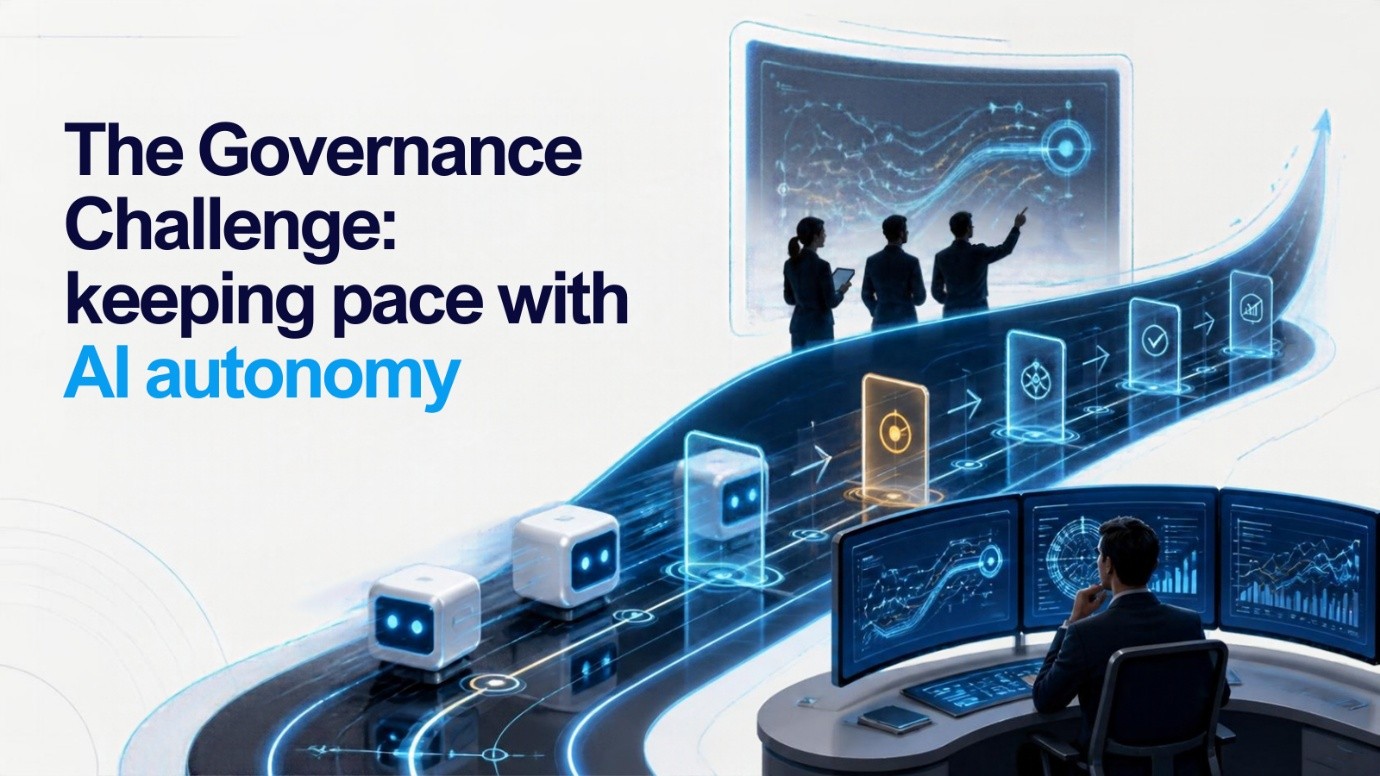
Security leaders, therefore, need to ask questions that go beyond whether an AI solution is accurate or effective.
- What data and systems can the AI access?
Does it have access to sensitive identities, customer information, source code, business applications, or security logs? Is that access appropriate for its role and responsibilities?
- What actions can it take?
Can it merely recommend an action, or can it isolate endpoints, revoke credentials, block users, or modify configurations without human approval?
- Who is accountable?
When an AI-driven decision causes disruption or fails to stop an attack, who owns the outcome?
- Can its decisions be explained?
Security teams need enough visibility into AI-driven decisions to investigate incidents, challenge incorrect conclusions, and demonstrate appropriate oversight.
- What happens when AI gets it wrong?
A mistaken assessment by a human analyst may affect an individual investigation. An automated decision executed at machine speed can potentially disrupt multiple systems, users, or business operations before the error is identified.
These aren’t reasons to slow AI adoption. They are reasons to make governance part of the AI strategy from the beginning.
A working model: Know, Define, Verify, Govern
Organizations can take a practical approach to AI governance in security operations by focusing on four areas.
Know. Maintain an inventory of AI models, agents, data sources, integrations, and automated workflows across the security environment. Treat each AI agent as a non-human identity, with appropriate authentication, least-privilege access, and clearly defined permissions.
Remember that AI agents can also become targets. Prompt injection, compromised integrations, and manipulated data may cause an agent to take unintended actions or expose sensitive information.
Define. Establish what AI can do independently, what requires human approval, and what should remain a recommendation.
The level of autonomy permitted for each action should reflect several factors, including how reversible the action is, how severe the impact could be if the decision is wrong, the sensitivity of the affected systems, and the reliability of the available evidence.
A practical starting point is to establish three autonomy tiers:
| Autonomy tier | Human role | Example actions |
|---|---|---|
| Autonomous within defined boundaries | Human supervises and can intervene | Enrich alerts, quarantine known malicious emails under predefined rules |
| Human approval required | Human approves before execution | Isolate a production server. Deactivate a privileged account. |
| Recommendation only | Human decides and executes | Recommend a firewall policy change, flag a privileged account for review. |
These tiers should be supported by clear approval thresholds, escalation procedures, and mechanisms to reverse actions where possible.
Verify. Test AI decisions continuously against new threats, changing data, and evolving operating conditions. Evaluate the agents themselves through adversarial testing, including attempts to manipulate their instructions, exploit their integrations, or trigger unauthorized actions. Testing should cover not only whether an agent correctly identifies threats, but also whether it respects its permissions and behaves appropriately when information is incomplete or misleading.
Govern. Assign clear ownership for each category of automated action. Maintain audit logs that capture the context, rationale, and actions needed for investigation and compliance.
Define escalation paths and provide security teams with an emergency mechanism to suspend an agent’s activity, revoke its permissions, and contain the impact of unintended actions.
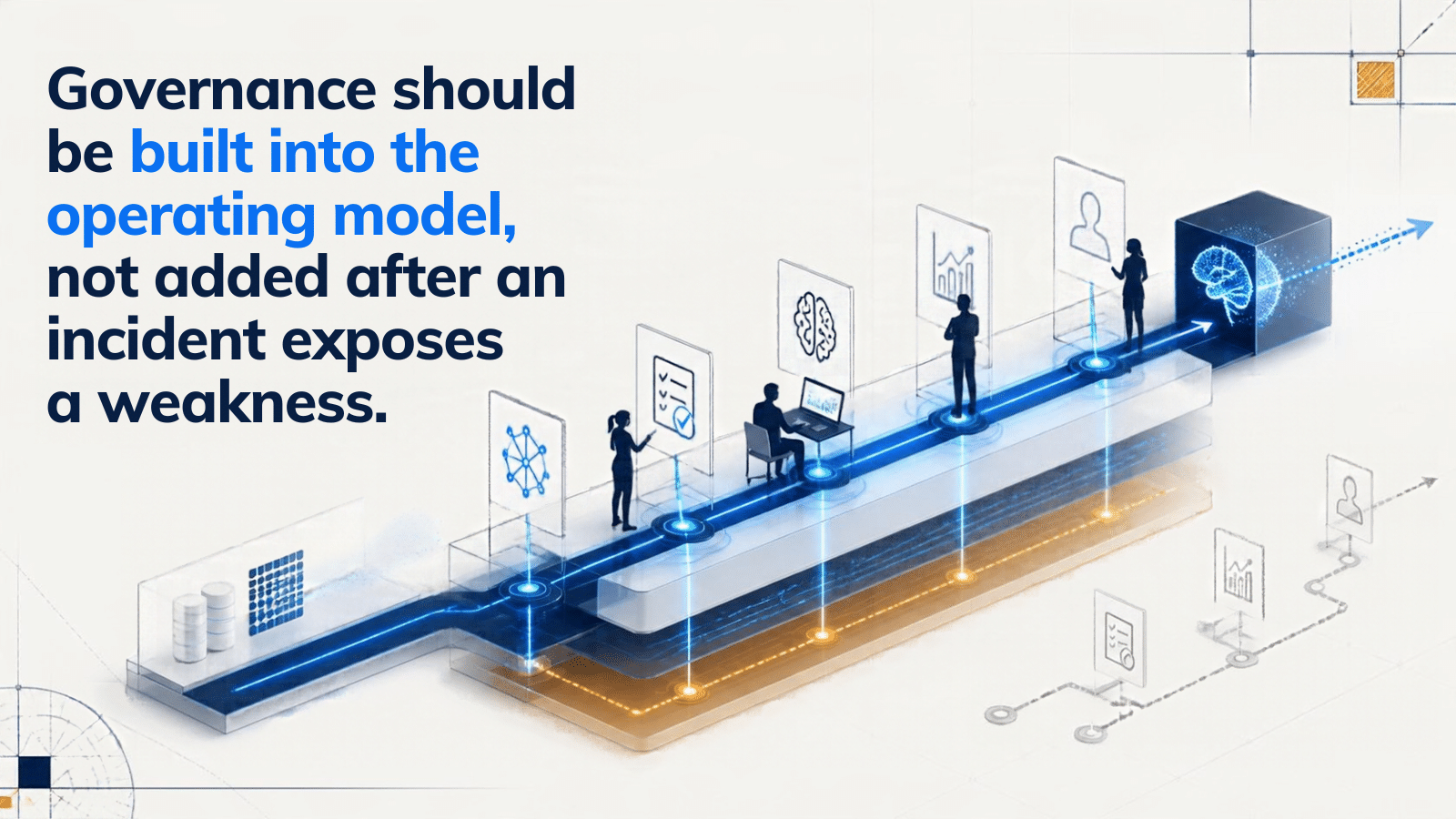
For Romanian enterprises, AI governance is increasingly connected to cybersecurity obligations, operational resilience, and data protection. Several European regulatory frameworks are particularly relevant.
- NIS2 Romania established its national cybersecurity framework through Emergency Ordinance 155/2024, subsequently approved with amendments by Law 124/2025. For entities within scope, management bodies are responsible for overseeing cybersecurity risk management measures. AI-driven security actions should therefore operate within documented controls, clear accountability structures, and appropriate oversight.
- DORA Financial entities within its scope are subject to requirements related to ICT risk management, incident handling, operational resilience, and third-party risk. Where AI supports security operations, organizations should assess how its use affects their ICT risk-management framework and operational controls.
- GDPR When AI-driven security decisions involve personal data, organizations must consider data-protection requirements. Article 22 may be relevant where a decision is based solely on automated processing and has legal or similarly significant effects on an individual. Not every automated security action meets that threshold, but appropriate safeguards and lawful data processing remain important.
- The EU AI Act. Its requirements depend on the AI system’s intended use, classification, and the applicable provisions. Organizations should assess which obligations apply rather than assume that every AI-enabled security tool falls into the same regulatory category.
Beyond regulation, there is also an operational consideration.
Many organizations operating from Romania support technology, business, and security operations across multiple European markets. In these environments, AI governance is not only a local concern: a poorly controlled agent or automated response can affect systems, users, and business services across organizational and national boundaries.
The challenge is to introduce AI in a way that strengthens security without creating new, unmanaged sources of operational risk.
Turning governance into an enabler
For enterprises in Romania and across Europe, the conversation around AI increasingly sits at the intersection of innovation, cybersecurity, data protection, and responsible technology adoption. The organizations that navigate this successfully will not necessarily be those that automate the most. They will be those who understand where autonomy creates value and where oversight creates trust.
That distinction matters.
Governance should not become a layer of approvals that slows every AI-driven response. Done well, it creates clearly defined guardrails within which AI can operate with greater speed and confidence.
This is where the right technology partner can make a difference. Organizations need to integrate cybersecurity, AI, data, cloud, and governance to ensure automation delivers measurable value without introducing unmanaged risk.
YASH Technologies works with enterprises to translate technology capabilities into practical business and operational outcomes. By combining relevant technology expertise with a risk-based approach to AI adoption, we support organizations in identifying where automation adds real value, defining appropriate controls, and establishing clear accountability for AI-driven actions.
The objective is not to automate everything. It is to make AI-driven security more effective, controlled, and trustworthy.
To learn more, contact us at cybersecurity@yash.com

More From Author.



Related Posts.

How Generative AI Is Driving Vision 2030 in Saudi Arabia
Gopakumar Nair


Governed Enterprise AI: YASH Technologies to Showcase NEUPAC™ at AI Everything Abu Dhabi 2026
Hrishikesh Neelkanth Ligade


YASH Technologies Heads to Ai4 2026 to Redefine Enterprise AI with NEUPAC™
Hrishikesh Neelkanth Ligade
AI Assistants and the Future of Employee Productivity
Abhishek Pandey
The AI-Powered Enterprise: What’s Next for Business Automation?
Abhishek Pandey

AI-driven automation for resilient supply chains and superior customer experiences
Srikanth Pattabi Raman