


Microsoft Sentinel Data Lake: A Game-Changer for Security Operations
Publish Date: January 22, 2026Recently Microsoft launched its Sentinel Data Lake in public preview, and it’s addressing one of the biggest challenge security teams face today: Managing security information on a budget
The problem we all know
Security operations team is drowning in data from hundreds of sources, but traditional SIEM solutions force you into impossible choices:
- Cut down on logging and risk missing threats
- Reduce data retention and lose forensic capabilities
- Pay astronomical costs to keep all your security data
More security data means more protection, but also more problems managing it all
What makes Sentinel Data Lake different
Microsoft has adopted a new strategy to address this issue from an entirely different perspective. Instead of treating data storage as an expensive necessity, Sentinel Data Lake makes it affordable and accessible. Here’s what changes:
Massive cost savings: Data retention is priced at less than 15% of traditional analytics logs. During the preview period, the data lake tier includes 30 days of free storage, with data processing also available at no cost.
Data integration: With more than 350 native connectors, security data from Microsoft and third-party sources is consolidated in a single location. No more data silos, no more blind spots.
AI-Ready foundation: This isn’t just about storage, it’s about creating the foundation for AI-powered security operations where tools like Security Copilot can work with complete context across your entire security landscape.
Real benefits for existing Sentinel users
If you’re already using Microsoft Sentinel, this is a natural evolution that supercharges your existing investment:
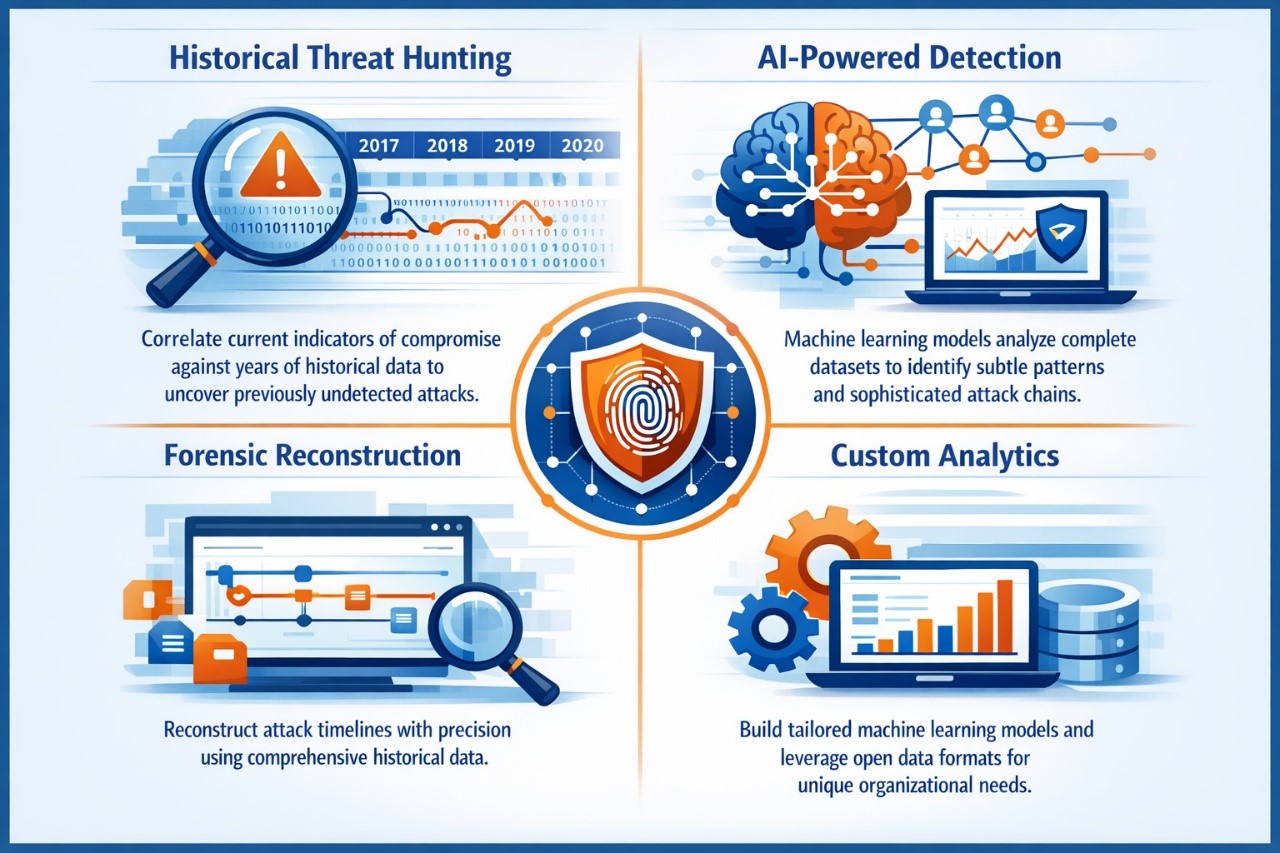
Extended investigation capabilities: Hunt for threats across months or years of data without worrying about storage limits or costs.
Better Threat Intelligence integration: Microsoft is democratizing threat intelligence by merging Defender Threat Intelligence capabilities into Sentinel at no additional cost. This means access to insights from 84 trillion daily signals and expertise from over 10,000 Microsoft security specialists.
Flexible analytics: Use familiar tools like KQL and Apache Spark to query across extended time periods and detect subtle attack patterns that might span months.
Compliance made easier: Meet regulatory requirements with scalable, cost-efficient data retention that doesn’t compromise your budget.
A pricing model that demonstrates practical value
Based on preview pricing information, Microsoft has structured this to be genuinely cost-effective:
- Data Lake Ingestion: $0.05 per GB
- Storage: $0.026 per GB per month
- Query Operations: $0.005 per GB of data analyzed
A notable feature is that, once enabled, new logs are systematically archived in the data lake at no extra cost. Additionally, data from the analytics tier is seamlessly integrated and accessible within the data lake tier.
Modern security, enhanced capabilities
The data lake enables capabilities that weren’t practical before:
Start Here
Microsoft Sentinel Data Lake has entered public preview. This release offers ease of transition for current Sentinel users, allowing immediate access to data lake features. The platform preserves the established Defender portal interface while introducing an advanced data management layer.
For organizations currently assessing their SIEM strategy, this advancement positions Sentinel as a highly attractive option. It offers not only robust security capabilities but also a scalable foundation for AI-driven security operations, all while maintaining cost efficiency.
Summary
This is Microsoft’s approach to improving security operations. Sentinel Data Lake addresses the data economics challenges that have affected security teams, facilitating faster threat detection, enhanced investigation capabilities, and the use of AI-powered defense tools.
The primary consideration is not simply the need for improved security data management, but rather the potential risk of delaying enhancements while competitors leverage advanced tools and achieve comprehensive visibility to address emerging threats.

Shivaram Jeyasekaran
Director – Cybersecurity Services, YASH Technologies
A distinguished cybersecurity leader with over 23 years of experience transforming enterprise security landscapes across global organizations. He is recognized for architecting and scaling robust cybersecurity programs that align with business objectives while maintaining cutting-edge defense capabilities. Shivaram has spearheaded numerous large-scale cybersecurity consulting engagements in his illustrious career, helping organizations navigate complex security challenges while balancing innovation with risk management. His approach combines strategic vision with practical implementation, ensuring organizations stay resilient in the face of evolving cyber threats.


More From Author.
Related Posts.



From Annual Audits to Always-On Assurance: How AI Is Redefining SOC & ISO Compliance
Mahipal Kirupanithy Shivaram Jeyasekaran

Why Third-Party Risk Can No Longer Be Manual: Building an AI-Driven TPRM Program
Mahipal Kirupanithy Shivaram Jeyasekaran

When Ransomware Reprices the Deal: Cyber Risk in Modern M&A
Ankush Arora Shivaram Jeyasekaran

The AWS Security Arsenal: 7 Services Every Cloud Leader Should Master
Mahipal Kirupanithy Shivaram Jeyasekaran
Stop Collecting Security Tools. Start Managing Cyber Risk.
Kaisar Chishti Shivaram Jeyasekaran Val Coucke
AI Governance: Board-Level Oversight for Emerging Technology
Shivaram Jeyasekaran

Security Budgeting: Making the Business Case for 2026
Shivaram Jeyasekaran


Securing AI/ML Models: Adversarial Attacks and Defenses
Shivaram Jeyasekaran

Digital Risk Assessment: Protecting Value in Mergers & Acquisitions
Shivaram Jeyasekaran