
From Annual Audits to Always-On Assurance: How AI Is Redefining SOC & ISO Compliance
Publish Date: February 26, 2026The old model of ticking compliance boxes once a year was never truly secure. Here’s how artificial intelligence is changing that – for good.
Imagine going to the doctor once a year and assuming you’re healthy for the next twelve months.
No monitoring. No early warning signs. No in-between checks. That’s essentially how traditional compliance has worked for decades.
And that’s the problem. For years, organizations have treated frameworks like SOC 2, ISO 27001, PCI DSS, and HIPAA as scheduled events. Evidence is gathered. Auditors review. Certificates are issued. Everyone exhales.
Then the cycle resets.
But cyber threats don’t operate on an audit calendar. Attackers don’t wait for your review window. And controls don’t stay effective simply because they passed last quarter.
The gap between being certified and being secure is becoming harder to ignore.
AI is beginning to close that gap.
The Old Model: Compliance as a Snapshot
Traditional compliance is built on a simple idea: prove that your controls meet requirements at a fixed point in time.
Auditors sample logs. Review policies. Interview teams. Issue an opinion.
But security isn’t static.
An access control configured properly in January can silently break in March. A vendor granted temporary privileged access may remain connected long after the project ends. A misconfigured cloud bucket can sit exposed for months.
Annual audits validate a moment — not continuous control health.
They also consume significant resources. Preparing for a SOC 2 Type II audit can take four to six weeks of engineering time. Teams scramble for screenshots, logs, approvals, and documentation — often diverting attention from strengthening security itself.
BY THE NUMBERS
- The average cost of a data breach has reached $4.45 million.
- 83% of organizations experienced more than one breach in a single year.
Periodic validation clearly isn’t enough.
What Continuous Compliance Actually Means
Continuous compliance isn’t about auditing more frequently.
It’s about embedding monitoring directly into daily operations — so controls are evaluated automatically, in real time.
Think less “annual physical” and more “always-on health tracker.”
| Dimension | Traditional Annual Audit | AI-Powered Continuous Compliance |
| Frequency | Once per year | Continuously, in real time |
| Evidence collection | Manual, weeks of effort | Automated, always up to date |
| Gap detection | Discovered at audit time | Flagged the moment they appear |
| Remediation time | Months or next audit cycle | Hours or days |
| Cost | High (consultants + engineering time) | Lower ongoing cost, fewer surprises |
| Business value | Certificate on a wall | Genuine, provable security posture |
How AI Makes It Scalable
Five years ago, continuous oversight at scale would have required an army of analysts.
AI changes that equation.
- Real-Time Control Monitoring
AI systems continuously evaluate cloud infrastructure, identity permissions, encryption states, and system configurations against compliance requirements.
If encryption lapses on a storage bucket, it’s flagged instantly.
If access isn’t revoked after termination, it’s detected automatically.
Modern AI models don’t just scan logs — they interpret the intent of controls and evaluate whether that intent is being met in practice.
- Automated Evidence Collection
One of the most time-consuming parts of compliance is gathering proof.
AI-enabled platforms integrate directly with cloud providers, identity systems, ticketing tools, and HR systems — collecting and mapping evidence to specific controls throughout the year.
When audit time arrives, you’re not scrambling. The documentation is already structured, timestamped, and aligned to framework requirements.
Engineering teams stay focused on innovation instead of documentation.
- Predictive Compliance & Risk Insight
Perhaps the most significant shift is predictive capability.
By analyzing patterns across systems, AI can identify where compliance gaps are likely to emerge.
Deploying a new microservice? The system can assess applicable controls before production.
Onboarding a vendor? Their security posture can be evaluated against your framework requirements proactively.
Impact Across Frameworks
AI-driven continuous compliance enhances every major framework:
- SOC 2 readiness becomes live and measurable across all Trust Service Criteria.
- ISO 27001’s Annex A controls can be continuously monitored rather than periodically sampled.
- PCI DSS and HIPAA environments gain real-time oversight in highly regulated contexts.
For organizations pursuing multiple certifications, AI-powered control mapping across frameworks reduces duplication — often cutting workload by 40–60%.
That’s not just operational efficiency.
It’s strategic resilience.
Addressing Common Concerns
“We’re too small.”
Continuous compliance platforms are increasingly accessible, especially for cloud-native organizations seeking early trust differentiation.
“Auditors won’t accept AI-generated evidence.”
Major audit firms already accept — and often prefer — continuously collected, structured evidence.
“What about false positives?”
Modern AI systems incorporate contextual analysis, significantly reducing noise and improving signal accuracy.
The Human Role Still Matters
AI doesn’t replace compliance teams.
It augments them.
AI excels at monitoring, detection, correlation, and documentation.
Humans interpret nuance, define risk appetite, and engage regulators.
The most effective programs treat AI as a tireless compliance analyst operating in the background — ensuring nothing slips through the cracks.
THE BOTTOM LINE
Compliance That Actually Protects You
Organizations that treat compliance as a yearly checkbox aren’t just inefficient — they’re exposed. AI-powered continuous compliance makes control performance visible every day. It reduces manual burden. It aligns compliance with real operational security.
The technology is here.
The question is no longer whether continuous assurance is possible — but how quickly organizations are willing to embrace it.
Because trust today isn’t proven once a year. It’s demonstrated continuously.
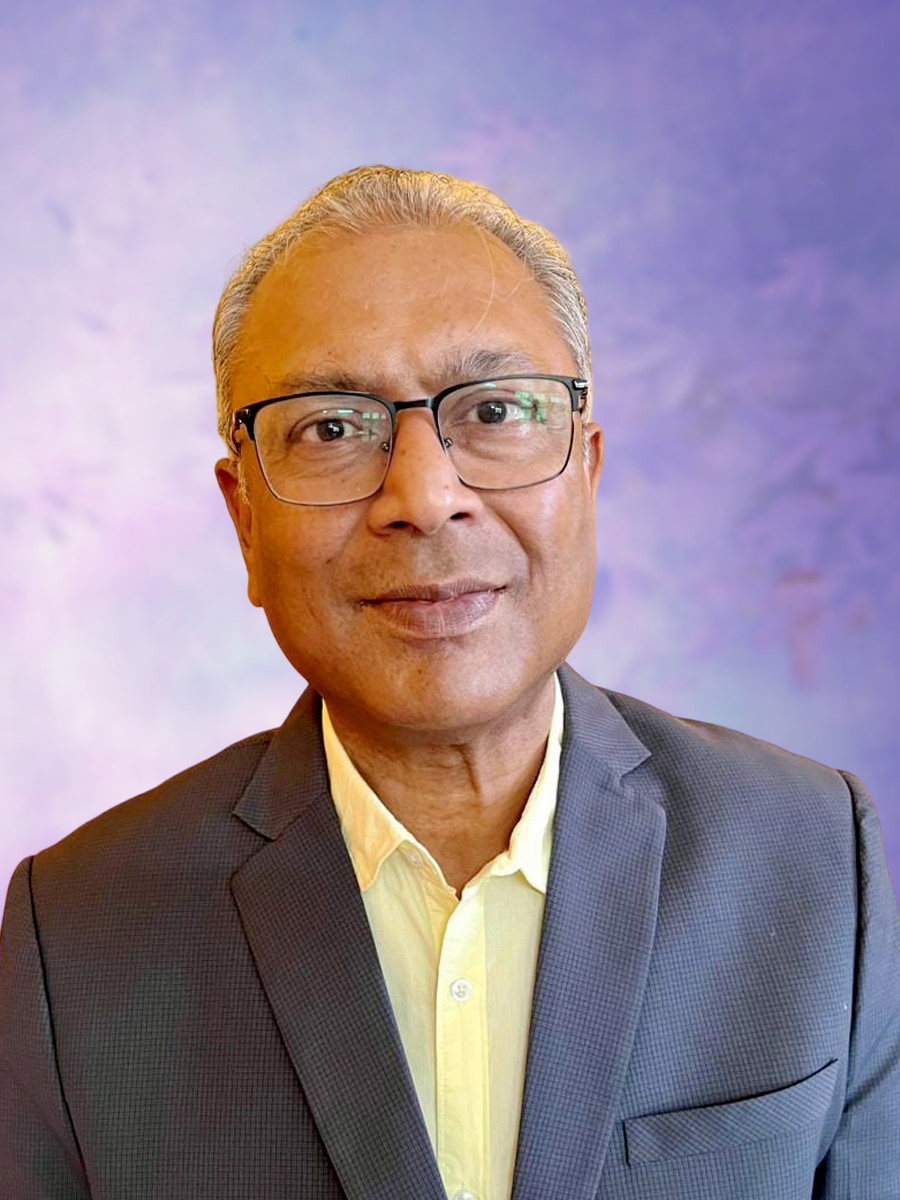
Shivaram Jeyasekaran
Director – Cybersecurity Services, YASH Technologies
A distinguished cybersecurity leader with over 23 years of experience transforming enterprise security landscapes across global organizations. He is recognized for architecting and scaling robust cybersecurity programs that align with business objectives while maintaining cutting-edge defense capabilities. Shivaram has spearheaded numerous large-scale cybersecurity consulting engagements in his illustrious career, helping organizations navigate complex security challenges while balancing innovation with risk management. His approach combines strategic vision with practical implementation, ensuring organizations stay resilient in the face of evolving cyber threats.
More From Author.
Related Posts.

The Hidden AI Risk in Your Cloud: Why CSPM Is Now a Board-Level Priority
Mahipal Kirupanithy

How AI-Powered EDR Stops Modern Attacks in Real Time
Mahipal Kirupanithy
Why Third-Party Risk Can No Longer Be Manual: Building an AI-Driven TPRM Program
Mahipal Kirupanithy Shivaram Jeyasekaran
When Ransomware Reprices the Deal: Cyber Risk in Modern M&A
Ankush Arora Shivaram Jeyasekaran
The AWS Security Arsenal: 7 Services Every Cloud Leader Should Master
Mahipal Kirupanithy Shivaram Jeyasekaran
Stop Collecting Security Tools. Start Managing Cyber Risk.
Kaisar Chishti Shivaram Jeyasekaran Val Coucke

Microsoft Sentinel Data Lake: A Game-Changer for Security Operations
Kaisar Chishti Shivaram Jeyasekaran Val Coucke
AI Governance: Board-Level Oversight for Emerging Technology
Shivaram Jeyasekaran
Security Budgeting: Making the Business Case for 2026
Shivaram Jeyasekaran