


AI Governance: Board-Level Oversight for Emerging Technology
Publish Date: January 22, 2026Artificial intelligence has evolved beyond being solely a topic for technology departments. It now constitutes a strategic matter that requires consideration by senior leadership.
Why Boards Can’t Ignore AI Anymore
Artificial intelligence is fundamentally transforming the way organisations operate, compete, and generate value. Its applications range from automating customer service processes to forecasting market trends, impacting nearly every aspect of contemporary business. However, with this considerable capability comes both responsibility and notable risk.
Boards lacking comprehensive understanding of their AI investments may face significant challenges. These include potential regulatory penalties, reputational harm, and strategic errors that could result in substantial financial losses.
What AI Governance Actually Means
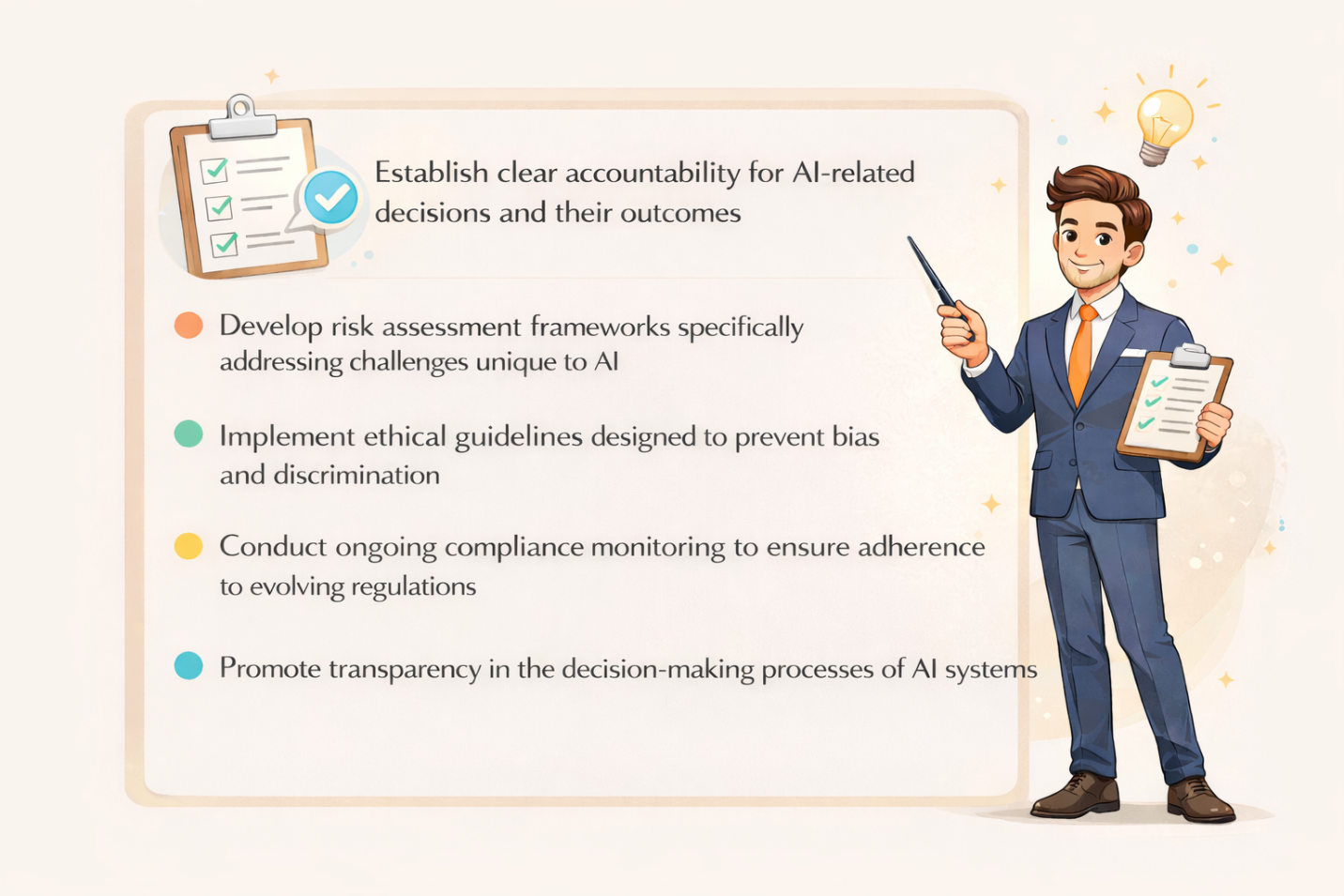
AI governance does not primarily require technical expertise in algorithms or programming. Rather, it involves implementing well-defined oversight mechanisms for the development, deployment, and ongoing monitoring of AI systems within an organization. Robust policies are essential to ensure that AI is utilized in an ethical and lawful manner, consistent with the organization’s core values and strategic objectives.
Key components include:
Risks Boards Should Consider
Regulatory Risk: Governments across the globe are implementing new AI regulations. The EU’s AI Act, executive orders in the United States, and emerging legal frameworks in Asia are rapidly altering the compliance requirements for organizations.
Reputational Risk: The deployment of biased hiring algorithms or discriminatory loan approval systems may result in substantial public criticism and long-term damage to brand reputation.
Operational Risk: AI systems are subject to failures, errors, and unpredictable behavior. Insufficient oversight can allow these issues to escalate and negatively impact operational effectiveness.
Strategic Risk: Allocating resources to ineffective AI initiatives or overlooking key opportunities can diminish competitive advantage and impede organizational growth.
What Constitutes Effective Board Oversight
Posing Critical Inquiries
While it is not necessary for board members to be specialists in artificial intelligence, they are expected to raise pertinent and challenging questions:
- Which AI systems are currently deployed, and what types of decisions are these systems authorised to make?
- By what methods do we evaluate these systems for potential bias and ensure fairness?
- What contingency plans are in place should an AI system fail?
- Who bears responsibility in the event that an AI system produces an error?
- Are we adhering to all applicable current and forthcoming regulatory requirements?
Build the Right Structure
It is advisable to form an AI oversight committee or broaden the scope of your existing technology committee. Additionally, ensure that at least one board member possesses advanced technological expertise, which may require recruiting individuals with appropriate qualifications.
Demand Transparency
It is essential to receive consistent updates on AI initiatives, potential risks, and any incidents, since effective governance relies on transparency.
Connect AI to Strategy
AI must align with your business strategy and risk tolerance. Each major AI investment needs a board-reviewed business case.
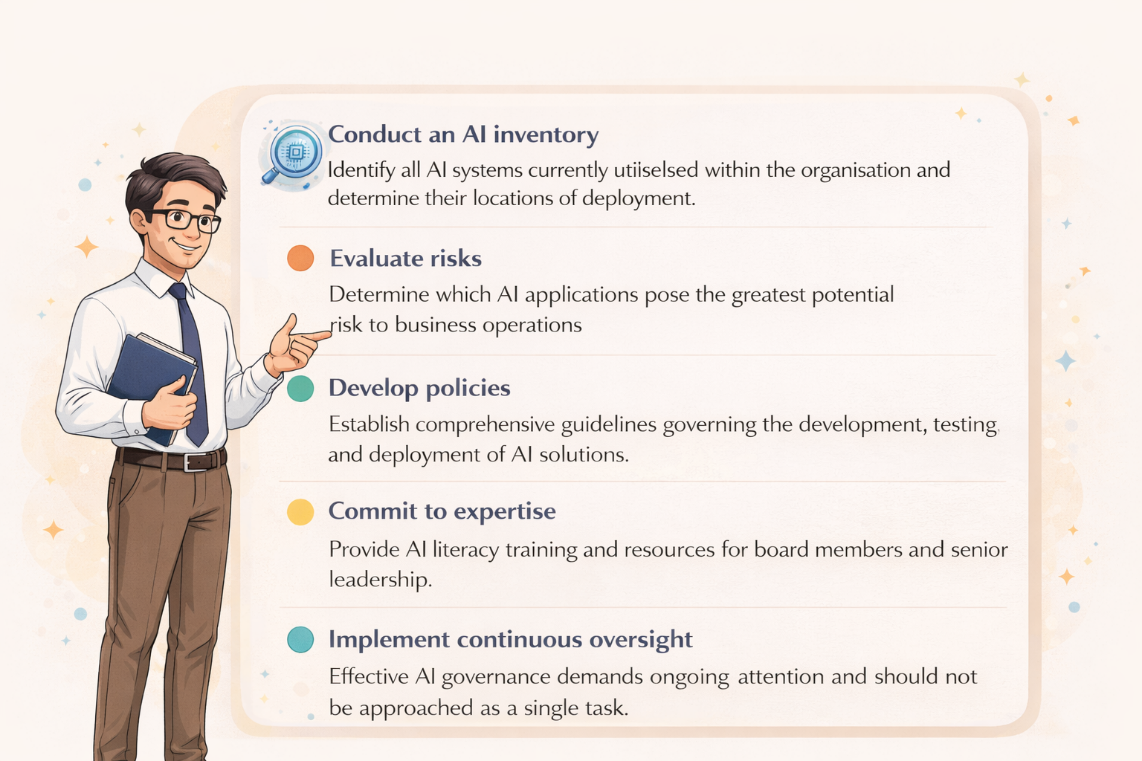
Practical Steps to Initiate Today
The Bottom Line
AI is rapidly changing business. Boards that see it as just another IT project risk falling behind. Good AI governance enables confident, fast innovation with proper safeguards. Board involvement in AI governance isn’t optional—it’s essential.

Shivaram Jeyasekaran
Director – Cybersecurity Services, YASH Technologies
A distinguished cybersecurity leader with over 23 years of experience transforming enterprise security landscapes across global organizations. He is recognized for architecting and scaling robust cybersecurity programs that align with business objectives while maintaining cutting-edge defense capabilities. Shivaram has spearheaded numerous large-scale cybersecurity consulting engagements in his illustrious career, helping organizations navigate complex security challenges while balancing innovation with risk management. His approach combines strategic vision with practical implementation, ensuring organizations stay resilient in the face of evolving cyber threats.
More From Author.
Related Posts.



From Annual Audits to Always-On Assurance: How AI Is Redefining SOC & ISO Compliance
Mahipal Kirupanithy Shivaram Jeyasekaran

Why Third-Party Risk Can No Longer Be Manual: Building an AI-Driven TPRM Program
Mahipal Kirupanithy Shivaram Jeyasekaran

When Ransomware Reprices the Deal: Cyber Risk in Modern M&A
Ankush Arora Shivaram Jeyasekaran

The AWS Security Arsenal: 7 Services Every Cloud Leader Should Master
Mahipal Kirupanithy Shivaram Jeyasekaran
Stop Collecting Security Tools. Start Managing Cyber Risk.
Kaisar Chishti Shivaram Jeyasekaran Val Coucke

Microsoft Sentinel Data Lake: A Game-Changer for Security Operations
Kaisar Chishti Shivaram Jeyasekaran Val Coucke

Security Budgeting: Making the Business Case for 2026
Shivaram Jeyasekaran


Securing AI/ML Models: Adversarial Attacks and Defenses
Shivaram Jeyasekaran

Digital Risk Assessment: Protecting Value in Mergers & Acquisitions
Shivaram Jeyasekaran