

From Hybrid Cloud to Autonomous Manufacturing: A Maturity Model for Cloud and AI in Manufacturing & Automotive Industries
Publish Date: July 2, 2026The Next Step in the Evolution of Manufacturing Transformation
Enter a large manufacturing operation anywhere in Wisconsin or Michigan—from an automotive assembly line in Detroit to a heavy machinery manufacturing operation in Milwaukee—and you will find three eras of technology coexisting.
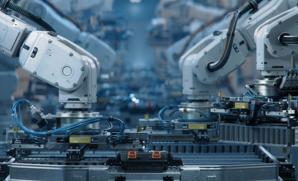
Robots driven by Artificial Intelligence:
IoT sensors collecting terabytes of data. Legacy systems installed well before cloud computing was even on the radar. This is the reality of manufacturing today. With more organizations racing toward their Industry 4.0 and 5.0 efforts, the question is no longer if the cloud should be used. The question is how OT, IT, Data, AI, and the Cloud can be combined into a single operating framework to boost efficiency, quality, resiliency, and profits.
Hybrid cloud has become much more than just an infrastructure approach:
Within the manufacturing ecosystem surrounding the Great Lakes region, organizations differ significantly when it comes to maturity level. While some are implementing AI-driven Predictive Maintenance and Digital Twin solutions, others have not yet overcome challenges with disconnected architectures and old infrastructures.
A systematic approach through the Cloud & AI Maturity Model can serve as a framework for overcoming those differences.
Why Hybrid Cloud Is Not An Option Any Longer
The manufacturing industry is getting increasingly data-driven. The connected factory floor, Predictive Quality Analytics, AI-driven Supply Chain, Industrial IoT platforms, and advanced automotive software generate huge volumes of operational data. The problem here is that not all of these workloads need to be migrated to the cloud. Factory operations require low-latency processing capabilities and on-site resiliency. Enterprise Analytics, AI, Collaboration platforms will be more efficient with cloud’s scalability and innovation. By combining on-premises operational environment and public cloud platforms, hybrid cloud brings together all the best from both approaches. For manufacturers, hybrid cloud is not an IT project anymore. It is a platform for business transformation. Why Manufacturing Leaders Are Reimagining the Factory of the Future
There are unprecedented challenges that manufacturing leaders face today:
- Supply chain disruption
- Labor shortage
- Sustainability requirements
- Cybersecurity concerns
- Higher costs
- Growing customers’ demands
And there are advancements in AI, Industrial IoT, Edge Computing, Digital Twins, and Cloud Platforms which allow to leverage those challenges. Modern manufacturing leaders are focusing their efforts on five key priorities:
AI-Powered Operational Excellence
Organizations use AI to optimize:
- Predictive Maintenance
- Quality Control
- Production optimization
- Demand forecasting
- Inventory management
- Energy optimization
Digital Twins and Virtual Manufacturing
Digital Twins make it possible to create virtual copies of factories, production lines, products, and supply chains.
The benefits include:
- Reduced downtime
- Accelerated product development
- Improved quality
- Better capacity planning
- Efficiency improvement
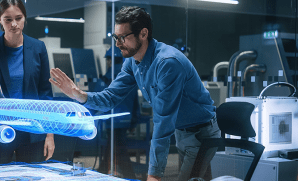
Industry 5.0 and Human Centric Manufacturing
Industry 5.0 builds on top of Industry 4.0 by incorporating:
- Human Expertise
- Artificial Intelligence
- Sustainable Manufacturing
- Operational Resilience
The purpose is to enhance humans through intelligent technology.
Cyber Resilience as a Production Requirement
Modern factories need to secure:
- Industrial Control Systems (ICS)
- SCADA Solutions
- MES Systems
- Edge Platforms
- Cloud Environments
- Supply Chains
Cyber resilience has become a production requirement and not an IT project.
Sustainable and Intelligent Operations
Manufacturers face increased pressures to:
- Cut down carbon footprint
- Enhance energy efficiency
- Meet their ESG targets
- Optimize resource usage
Cloud and Artificial Intelligence technologies help organizations to accomplish their sustainability goals while reducing costs.
The Seven Fault Lines that Slow Down Manufacturing Transformation
- Legacy Manufacturing Systems – the Brownfield Problem
Most manufacturing plants were simply not built to run natively in the cloud.
PLCs, SCADA solutions, MES platforms and historians are at the core of most production systems.
- OT/IT Convergence – Merging Two Technologies
Industry 4.0 value proposition lies in merging the world of OT and IT.
- Data Silos in Industry – the AI Obstacle
Lack of unified industrial data strategy creates problems in scaling any AI project.
- OT Cyber Security Vulnerability
Digital factories create additional exposure and need Zero Trust Architecture, Identity Security and Continuous Monitoring.
- Cloud Finances
Effective Cloud Finance Management (FinOps) is crucial for maximum ROI and cost optimization.
- Skills and Change Management
Success of transformation project depends almost equally on preparedness of the workforce.
Modernization Sequencing
The most successful manufacturers modernize incrementally rather than attempting enterprise-wide transformation at once.
The Manufacturing Cloud & AI Maturity Model
| Stage | Phase | Focus Areas | Business Outcome |
|---|---|---|---|
| 1 | Discovery | Asset inventory, OT assessment, governance review | Visibility |
| 2 | Foundation | Landing zones, security controls, cloud connectivity, FinOps | Stability |
| 3 | Integration | OT/IT convergence, edge computing, MES integration | Connectivity |
| 4 | Optimization | AIOps, observability, automation, cybersecurity | Efficiency |
| 5 | Intelligence | AI, predictive analytics, digital twins | Insight |
| 6 | Autonomous Enterprise | Agentic AI, self-healing operations, autonomous manufacturing | Innovation |
Next Frontier: Agentic AI & Autonomous Manufacturing
In contrast to conventional AI systems which only offer recommendations, AI Agents independently analyze data, make decisions, perform actions, and continuously optimize processes.
Types include:
- Production Optimization Agents
- Predictive Maintenance Agents
- Supply Chain Intelligence Agents
- Quality Assurance Agents
- FinOps Optimization Agents
- OT Security Agents
These smart agents together form the basis of Autonomous Manufacturing.
YASH Technologies’ Approach To Accelerate Manufacturing Transformation with the help of YASH Technologies, manufacturers can go past infrastructure transformation to achieve intelligence and autonomy. Our Cloud & Infrastructure Management Services (CIMS) vertical brings together manufacturing experience, cloud engineering, AI breakthroughs, and managed services to deliver meaningful business results.
- Manufacturing Cloud Transformation
- Multi-Cloud Services on AWS, Azure & GCP
- Hybrid Cloud Transformation
- VMware Transformation
- SAP Cloud Transformation
- Edge Computing Platforms
- Industrial AI & Agentic Operations
- Predictive Maintenance Solutions
- Computer Vision Quality Inspection
- AI-Based Production Analytics
- Supply Chain Intelligence
- Agentic AI Architectures
- Digital Twin Implementation
- Security & Cyber Resilience
- OT Security Assessments
- Zero Trust Architecture
- Security Operations
- Cloud Security Posture Management
- Compliance & Governance
- AI-Based Managed Services
Through AMURAA®, YASH offers you:
- Predictive Operations
- Intelligent Automation
- Self-healing Infrastructure
- AIOps
- Proactive Incident Management
- FinOps Optimization
Through the combination of Cloud, Data, AI, Security, and Industry expertise, YASH helps accelerate customers on their journey to Autonomous Manufacturing.
Looking Forward
Hybrid Cloud maturity is not the goal anymore.
The goal is intelligent, resilient and more autonomous manufacturing. Companies who succeed in blending Cloud, Data, AI, Automation and Human expertise will be in the best position to thrive in the coming decade of manufacturing. It is not whether but how to become a hybrid cloud now. How soon can your company transition from Hybrid Cloud to Autonomous Manufacturing?


More From Author.
Related Posts.
The Smart Factory Workforce: Getting Pennsylvania Ready for the Next Industrial Revolution
Gowthaman Sibi Kodairasu
Bridging Pennsylvania’s Manufacturing Skills Gap with AI
Gowthaman Sibi Kodairasu
The Advent of AI Copilots in Pennsylvania Manufacturing
Gowthaman Sibi Kodairasu